
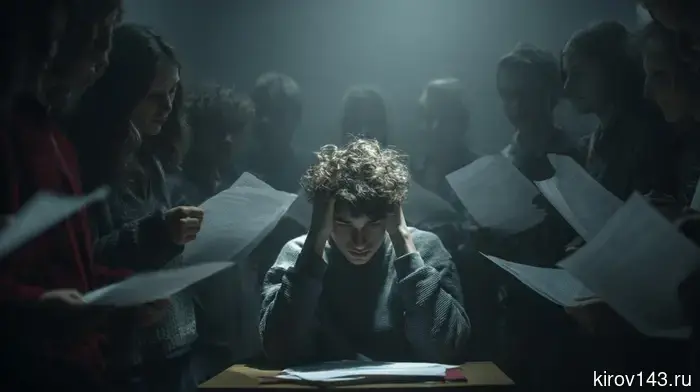
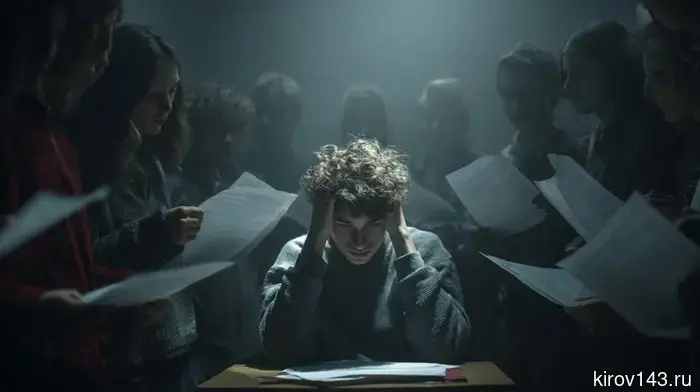
"To prevent children from growing up to be selfish": a psychologist and teenagers discuss prohibitions and traditional values.
We asked these questions to clinical psychologist Alexander Votintsev from the "Sovermed" center and two 16-year-old boys — Nikita and Stepa. We also looked at typical parental mistakes that can be made in raising children.
What is happening to children? Anxiety, gadgets, and FOMO syndrome
According to psychologist Alexander Votintsev, children and teenagers have changed massively over the past five years. And not for the better.
"The rise in anxiety and depressive states, dependence on gadgets, a decrease in live communication skills, early adulthood, and polarization of behavior — from apathy to perfectionism. A widespread phenomenon is the fear of missing out (FOMO), when a child is afraid of missing something important on social media," the expert lists.
Sixteen-year-old Nikita notices another trend: in his generation, children have become more flexible and calmer. Physical punishment, which was used on children as a form of punishment, has almost disappeared. "You rarely see that now," he says. "But many now have quality gadgets."
Two eras have collided: physical strictness is fading, but in its place comes digital dependence — and the question of which of these extremes is worse for children's mental health remains open.
Prohibitions: do they work or teach to be cunning?
The main question for parents: if everything unnecessary is prohibited, will the child become obedient? The psychologist is categorical — no.
"The increase in prohibitions leads to an increase in anxiety, the formation of cunning and passive aggression. Children learn to circumvent prohibitions, to look for loopholes. They do not become more compliant — they adapt through cunning or accumulate tension, which will later erupt in a crisis," explains Alexander Votintsev.
Teenagers confirm this. When asked, "What prohibitions were the most senseless?" Nikita answers briefly: "There were none." However, Stepa recalls: "In childhood, they prohibited sitting at the computer for too long — I still don't understand why." This means that a prohibition without explanation only causes confusion, not understanding. However, Stepa gives an example of a working prohibition:
"My parents told me to never smoke or drink. It used to annoy me — I didn't understand why, what was so bad about it? Then I grew up, understood, and accepted."
"Traditional values": what is it and does it work "from above"?
When adults talk about upbringing in traditional values, teenagers hear different things.
Nikita: "I hear that I should be like they say. It often hinders more than helps."
Stepa: "Respect for elders, family, work."
Two polar perceptions. Why?
The psychologist explains: values imposed from above (through school, law, "talks about important things") often do not take root. Children feel the insincerity when words do not match actions. Formal teaching without a living example does not evoke internal acceptance. Especially among teenagers, who are sensitive to manipulation.
Nikita speaks directly about the school agenda: "It doesn't help at all, neither positively nor negatively. It only teaches that there are really useful topics that are important to know at certain times." Stepa adds: "Patriotism is an important part, but in many ways, it's just glorifying the country."
Personal example of parents: when it annoys and when it saves
The most sensitive moment. The psychologist says that prohibitions without a personal example create double standards that kill trust.
Stepa already mentioned the example when he was prohibited from smoking and drinking, but his parents did it themselves. This caused irritation and misunderstanding.
Nikita has a different experience. "When my parents explained the reason for the prohibition and engaged in dialogue, I was more likely to agree," he says. "But if they just presented it as a fact without explanations, I looked for ways to circumvent the prohibition. Relationships could deteriorate, but then returned to normal if parents changed their approach."
So the key factor is not the prohibition itself, but how it is presented.
What mistakes do parents make? Through the eyes of teenagers
Nikita and Stepa willingly share what they think parents do wrong.
Nikita considers the main mistake to be the inability to listen: "Parents are often busy with their problems and do not want to delve into ours. Also, double standards: 'I can, you can't' without a clear reason. This annoys and undermines respect."
Stepa adds: "Parents often do not give freedom. When they decide everything for you, they don't let you make mistakes. As a result, you either rebel or grow up dependent. And conversely — when parents don't care, that's bad too. A golden mean is needed: to support but not suffocate."
And what about parents? Typical mistakes and methods
Years of practice by psychologists paint a composite portrait of the "parent." What do most moms and dads want? For their child to be successful, obedient, and grateful. And they use:
A prohibitive-punitive model ("If you don't do your homework — no phone"). Result: the child learns to lie.
Overprotection ("I know better what you need"). Result: an infantile egoist grows up.
Emotional swings (sometimes shouting, sometimes ignoring). Result: anxiety disorders and distrust of the world.
Cult of achievement ("You must be the best"). Result: perfectionism and burnout already in school.
The number one mistake, according to the psychologist, is trying to control everything without building an emotional connection.
"Children need not rigidity, but stability and a sense that they are loved not for their grades."
The main fear of adults: they will grow up irresponsible — what leads to this?
Nikita candidly says: "Among my acquaintances, there are no irresponsible ones. This is due to the fact that parents either care too much about their children or, on the contrary, neglect them, and children understand that they have to do everything themselves, while not knowing how to do it 'right.' That is, two extremes: overprotection and neglect.
Stepa sees a third reason: "The influence of the environment." And adds an important point: "This outcome can be caused by both an excess of freedom and strict prohibitions."
The psychologist confirms: "The stricter the control, the more radical the rebellion. Accumulation of tension, romanticization of the forbidden, lack of dialogue skills — and energy goes into destructiveness." In more free societies, where teenagers are talked to rather than prohibited, rebellion is softer.
What to do? One recommendation for the whole country
Alexander Votintsev gives a clear recipe:
"Shift the focus from control to support. Instead of prohibiting — explain and discuss. Instead of demanding unconditional obedience — develop critical thinking. Instead of isolating from the 'harmful' — teach to filter information. Raise not 'convenient' children, but resilient and conscious ones."
What specifically does a child need, according to the specialist:
A sense of security (it's okay to make mistakes and ask questions).
Open dialogue (discuss difficult topics without judgment).
Living examples of significant adults.
Flexible boundaries instead of total prohibitions.
Teenagers agree. Nikita, answering the question "What would you change in the upbringing system?", said: "I would remove aggressive methods of upbringing and add more friendliness." And Stepa, although he didn't press an imaginary "change" button, noted: "I would raise children roughly the same way I was raised" — his parents, despite their contradictions, gave him that very living example and the freedom to understand prohibitions.
And what about "not growing up to be a difficult person"? Definition from teenagers
We asked Nikita and Stepa who they themselves consider to be that "unpleasant type" (to put it mildly).
Nikita: "It's someone who doesn't listen to anyone and doesn't care about the surrounding society. But such people know how to find an approach to most — it's pleasant to talk and 'hang out' with them."
Did you notice the paradox? Externally, such a person can be charming. But the essence is indifference.
Stepa: "Rather, it's someone who breaks the rules. Most at least do not violate personal boundaries and adhere to ethical norms. And such people do everything contrary."
So, according to the teenagers themselves, the "unpleasant type" is someone who does not respect others' boundaries and disregards society. The irony is that with excessive prohibitions, we risk raising just such a person — secretly aggressive, cunning, and indifferent to rules.
Prohibitions will not save
Neither the psychologist nor the teenagers believe in the magic of total prohibitions and official values. Only living things work: respectful dialogue, personal example (even with mistakes), stability, and support.
"Children who feel that they are heard and understood are more likely to grow up to be adults capable of building a healthy society," summarizes Alexander Votintsev.
Thus, the main recipe for not raising a callous and irresponsible person is to stop fearing this and simply start being there. And not to lie. And not to prohibit without explanations.
Другие Новости Кирова (НЗК)
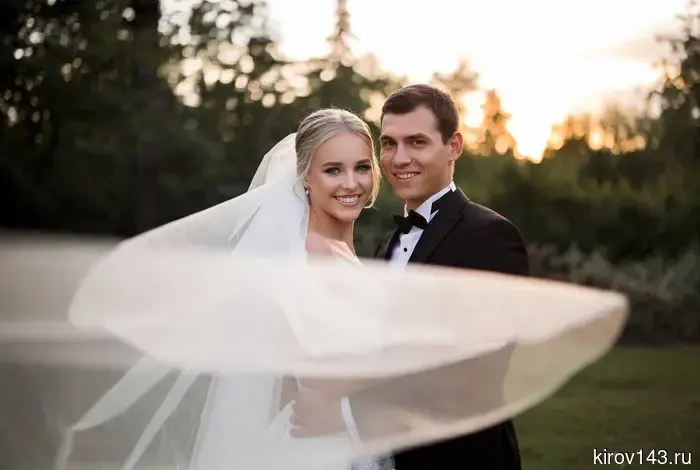 To avoid being "bitter": experts named five budget items that unnecessarily bankrupt newlyweds.
Organizing a wedding remains one of the most expensive events in a couple's life. However, even with a modest budget, it is possible to hold a beautiful and memorable celebration. In 2026, newlyweds are increasingly opting to forgo unnecessary expenses in favor of practical and modern solutions. Experts in the field shared insights on where savings can be made without compromising the celebration.
To avoid being "bitter": experts named five budget items that unnecessarily bankrupt newlyweds.
Organizing a wedding remains one of the most expensive events in a couple's life. However, even with a modest budget, it is possible to hold a beautiful and memorable celebration. In 2026, newlyweds are increasingly opting to forgo unnecessary expenses in favor of practical and modern solutions. Experts in the field shared insights on where savings can be made without compromising the celebration.
 Most graduates of the Kirov region took the Unified State Exam in biology on June 15.
Today, exams in biology, geography, and the written part of foreign languages took place, reported the Ministry of Education of the Kirov Region.
Most graduates of the Kirov region took the Unified State Exam in biology on June 15.
Today, exams in biology, geography, and the written part of foreign languages took place, reported the Ministry of Education of the Kirov Region.
 В Кировской области прогнозируются грозы и усиление ветра.
Завтра в некоторых районах Кировской области прогнозируются ливни, грозы, град, шквалы и ветер с порывами до 24 м/с. Об этом сообщили в МЧС со ссылкой на региональный гидрометцентр. Жителям советуют держаться подальше от линий электропередачи и ненадежных построек, а также не оставлять рядом с ними автомобили.
В Кировской области прогнозируются грозы и усиление ветра.
Завтра в некоторых районах Кировской области прогнозируются ливни, грозы, град, шквалы и ветер с порывами до 24 м/с. Об этом сообщили в МЧС со ссылкой на региональный гидрометцентр. Жителям советуют держаться подальше от линий электропередачи и ненадежных построек, а также не оставлять рядом с ними автомобили.
 The shortest workweek awaits Russians in December.
In 2026, residents of Russia can expect two more short working weeks — in November and December.
The shortest workweek awaits Russians in December.
In 2026, residents of Russia can expect two more short working weeks — in November and December.
 Candidates for contract positions were barred due to phobias and schizophrenia.
Starting from June 15, 2026, a revised order from the Ministry of Defense came into effect in Russia, listing diseases that hinder contract service. The document for the first time divided mental disorders into six specific diagnoses — from schizophrenia to phobias.
Candidates for contract positions were barred due to phobias and schizophrenia.
Starting from June 15, 2026, a revised order from the Ministry of Defense came into effect in Russia, listing diseases that hinder contract service. The document for the first time divided mental disorders into six specific diagnoses — from schizophrenia to phobias.
 "To prevent children from growing up to be selfish": a psychologist and teenagers discuss prohibitions and traditional values.
How to avoid raising an irresponsible and callous person. Do strict prohibitions help? Do "traditional values," imposed from above, work? And what actually shapes a normal personality?
"To prevent children from growing up to be selfish": a psychologist and teenagers discuss prohibitions and traditional values.
How to avoid raising an irresponsible and callous person. Do strict prohibitions help? Do "traditional values," imposed from above, work? And what actually shapes a normal personality?
"To prevent children from growing up to be selfish": a psychologist and teenagers discuss prohibitions and traditional values.
How not to raise an irresponsible and callous person. Do strict prohibitions help? Do "traditional values" imposed from above work? And what really shapes a normal personality?