

"Let's return everything that was stolen": scammers have gone for a second round
Data obtained by the editorial team from one of the major banks indicates a troubling trend. In the second quarter of 2026, the share of repeat attacks on victims of investment fraud doubled compared to the same period in 2025. Criminals are not only hunting for newcomers — they are specifically targeting those who have already fallen victim once.
Why is it easier to attack again? Analysts identify three reasons. First, a person who has already been subjected to social engineering is considered psychologically vulnerable and more suggestible. Second, the fraudsters already have their full name, phone number, and details of the previous scam — this allows them to make the scenarios more convincing. Third, they often know how much money the victim has left in other accounts and whether credit limits have been exhausted.
What do the new schemes look like?
The first option: a call from someone claiming to be an employee of the "Fund for Supporting Victims of Crimes." The criminals explain that the fund works directly with the Ministry of Internal Affairs and helps obtain compensation from the state. The victim is briefly told about the scheme of their previous scam — supposedly the information came from the police or the bank. For formality, they ask to send proof (correspondence, screenshots of transfers), and then to fill out a compensation application and provide a code from an SMS.
The second option: a call from the Economic Investigations Service of Interpol. According to the story, the criminals who deceived the victim were caught abroad, and their call center operated across several countries. The fraudsters have repented and are ready to compensate for the damage. The victim is offered to file a report on the official Interpol website, register, and provide a code from an SMS so that the data "automatically appears in the system."
In reality, the code is needed to access the victim's mobile banking app. After that, the fraudsters take out loans and withdraw all the money from the accounts.
According to T-Bank, most losses are due to social engineering: convincing a person to part with their savings is much easier than hacking an app or stealing a phone. Those who have already invested in fraudulent investment projects are most often targeted again — people in distress are ready to believe in any "miracle" to recover their savings.
Among criminals, the resale of lists of "warm" victims is also thriving. Such databases not only include contacts but also specify which scheme the person fell for, allowing for the perfect scenario for repeat fraud.
What to do to avoid falling victim twice:
Government agencies and the police never call first with offers to return stolen money through "special accounts" or to pay "commissions." This is the hallmark of fraudsters.
Never disclose codes from SMS. Only scammers ask for them. Law enforcement officers, government agencies, and banks do not need such codes.
At the slightest suspicion, hang up and call the agency back using the official number.
Russians are also reminded of technological means of protection that help identify fraudulent calls. However, the main thing remains — human vigilance and a critical attitude toward every call from an unfamiliar number.
Другие Новости Кирова (НЗК)
 There will be no more fines for "zero" declarations.
The State Duma adopted amendments to the Tax Code that exempt citizens from liability for not submitting so-called zero declarations. The law applies to cases where the tax base is absent and the amount of tax payable is zero.
There will be no more fines for "zero" declarations.
The State Duma adopted amendments to the Tax Code that exempt citizens from liability for not submitting so-called zero declarations. The law applies to cases where the tax base is absent and the amount of tax payable is zero.
 A resident of Darovsky gave 9.2 million rubles to scammers.
A 43-year-old woman from the village of Darovskoy lost a large sum of money after communicating with fake employees of the Central Bank and the FSB. A criminal case has been initiated.
A resident of Darovsky gave 9.2 million rubles to scammers.
A 43-year-old woman from the village of Darovskoy lost a large sum of money after communicating with fake employees of the Central Bank and the FSB. A criminal case has been initiated.
 A 58-year-old resident of Kirov has been restored the right to an early pension.
In the Pervomaisky District of Kirov, a pensioner achieved a recalculation after the intervention of the prosecutor's office. The reason for the court dispute was the refusal to include two years of work at an agricultural enterprise in the special work experience.
A 58-year-old resident of Kirov has been restored the right to an early pension.
In the Pervomaisky District of Kirov, a pensioner achieved a recalculation after the intervention of the prosecutor's office. The reason for the court dispute was the refusal to include two years of work at an agricultural enterprise in the special work experience.
 Since June 10, bears in the Kirov region can live peacefully.
The spring bear hunting season ends on June 10. The ministry reminds hunters: after harvesting or the expiration of the permit, it is necessary to send information about this.
Since June 10, bears in the Kirov region can live peacefully.
The spring bear hunting season ends on June 10. The ministry reminds hunters: after harvesting or the expiration of the permit, it is necessary to send information about this.
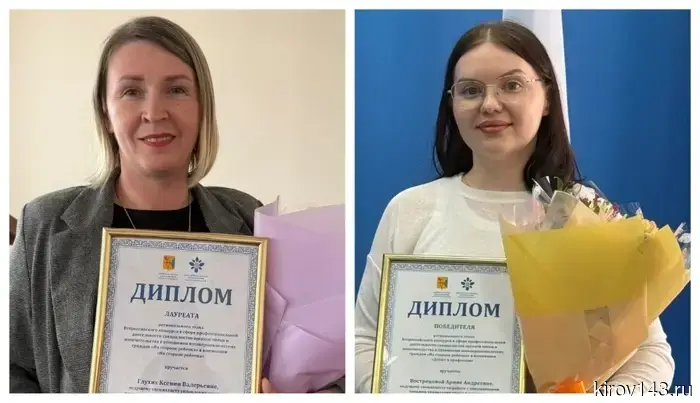 Специалисты управления опеки Кирова стали победителями регионального конкурса профессионального мастерства.
Закончился региональный этап всероссийского конкурса для специалистов органов опеки и попечительства «На стороне ребенка». Участники продемонстрировали свои знания законодательства в данной области, а также представили свои достижения, включая методы и подходы к защите прав детей, оставшихся без.
Специалисты управления опеки Кирова стали победителями регионального конкурса профессионального мастерства.
Закончился региональный этап всероссийского конкурса для специалистов органов опеки и попечительства «На стороне ребенка». Участники продемонстрировали свои знания законодательства в данной области, а также представили свои достижения, включая методы и подходы к защите прав детей, оставшихся без.
 Beeline has launched reliable 4G connectivity for customers at the "Maxi" shopping mall in Kirov.
High-speed 4G* internet from Beeline has launched in one of the largest shopping and entertainment centers in Kirov – "Maxi" on Luganskaya. Now, visitors to the shopping center, customers of the operator, can comfortably use digital services while shopping, even during temporary network outages.
Beeline has launched reliable 4G connectivity for customers at the "Maxi" shopping mall in Kirov.
High-speed 4G* internet from Beeline has launched in one of the largest shopping and entertainment centers in Kirov – "Maxi" on Luganskaya. Now, visitors to the shopping center, customers of the operator, can comfortably use digital services while shopping, even during temporary network outages.
"Let's return everything that was stolen": scammers have gone for a second round
First, a person is tricked into giving money under the guise of investments. And when they are left with nothing, "rescuers" from a fake fund or "Interpol" come in. In 2026, a trend is gaining momentum in Russia: the deceived are deceived again, playing on the desire to recover what was lost.