
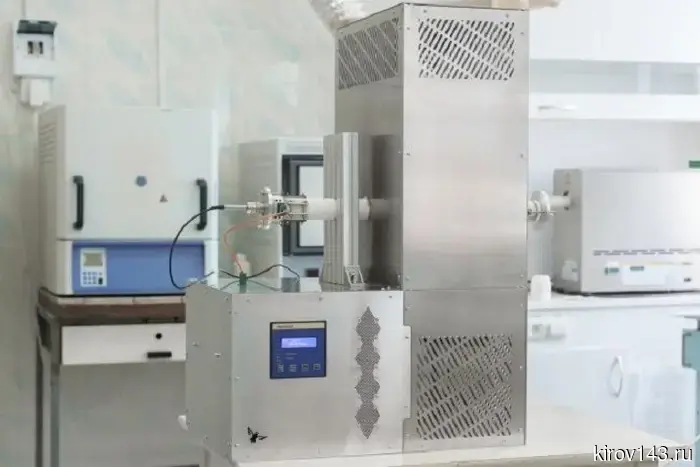
"Priority-2030": VyatSU scientists have created a dilatometer for high-temperature analysis
The main task of the dilatometry method is to understand how the dimensions of a body change under the influence of temperature, pressure, ionizing radiation, and other factors. Scientists from the Institute of Chemistry and Ecology of VyatSU, as part of the strategic technological project "Materials and Technologies of Electrochemical Energy" within the university's development program for 2025-2036, have created a prototype of a high-temperature dilatometer. The development team included: Associate Professor of the Department of Technology of Inorganic Substances and Electrochemical Production, Ph.D. Vladimir Vorotnikov, Junior Researcher at the Competence Center "Polymer Materials" Alexey Ivanov, Engineer at the Competence Center "Polymer Materials" Mark Bobro, and laboratory engineers of the Department of Technology of Inorganic Substances and Electrochemical Production Anatoly Duvakin and Stepan Chikyshev. "Most dilatometers operate in the range from room temperature to 900 °C. This development allows for the investigation of materials up to 1400 °C. At the same time, the increased temperature range raises the requirements for the structural materials used in the dilatometer. The knowledge of our team in the field of materials science and instrument engineering has allowed us to develop a reliable design of the device and a user-friendly interface," shared the head of research and development work Vladimir Vorotnikov. An integral part of the instrument's design is a high-precision probe that records changes in the size of the object during heating and cooling. In practice, the device works as follows: a sample of ceramics, metal, or glass is fixed in a cell, which is then placed in a high-temperature chamber. During heating or cooling, the material changes its geometric dimensions, which are recorded with nanometer accuracy using a length change sensor and transmitted in digital form to a PC. The result of the experiment is the dependence of the sample's length change on temperature and time. The experiment, which takes about a day on average, does not require the constant presence of an operator. The system is fully automated and can independently detect and eliminate malfunctions, such as a temporary power outage. "In case of a signal loss from any device, the system will reboot the dilatometer, restore the connection, and restart data collection, ensuring the integrity of the research," explained software developer Alexey Ivanov. The significance of the dilatometry method lies in its ability to directly assess the following material characteristics: thermal expansion coefficient, phase transitions, and softening points of various compounds. This development is applicable for certifying the properties of materials used in a wide range of fields: aerospace industry, construction, electrochemical energy, electronics, and even dentistry. The high-temperature dilatometer is the second development by VyatSU scientists within the framework of the strategic technological project. In 2025, researchers presented a high-temperature microscope for studying the sintering of materials. The prototype of the high-temperature dilatometer has been handed over to the customer – the branch of the Petersburg Institute of Nuclear Physics named after B.P. Konstantinov of the National Research Center – Institute of Silicate Chemistry named after I.V. Grebenshchikov (Branch of the NRC "Kurchatov Institute" - PIAF - ISH), calibrated, and prepared for operation. Natalia Tyurnina, Ph.D., Deputy Director for Extrabudgetary Activities, Infrastructure, and Science Popularization of the branch of the NRC "Kurchatov Institute" - PIAF - ISH noted: "We are glad to be involved in the development of domestic research equipment and to be users of the prototype of the high-temperature dilatometer, which organically complements the experimental quartz dilatometer, also developed by colleagues, and will allow us to expand our knowledge of the oxide systems we study over a wide temperature range."
Другие Новости Кирова (НЗК)
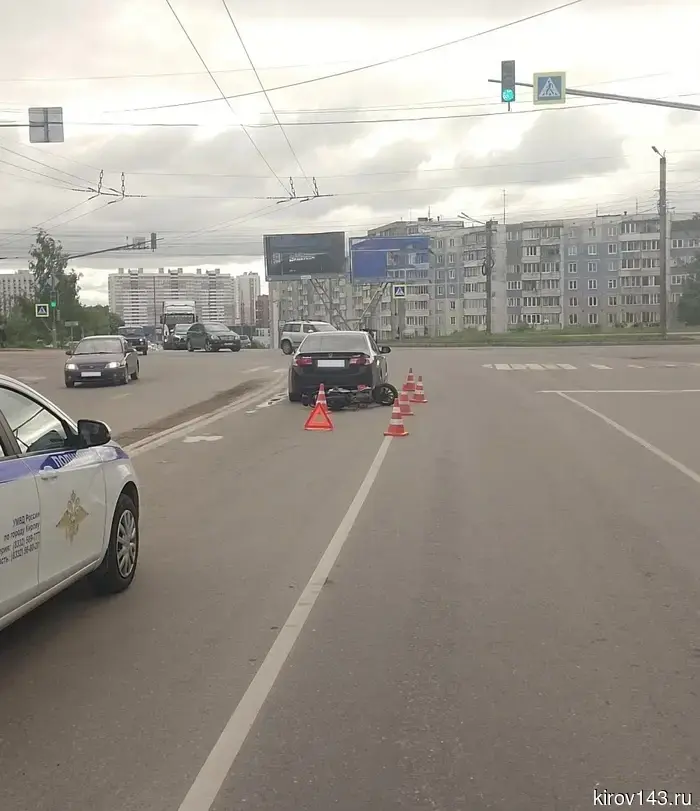 В Кирове в результате ДТП пострадал 18-летний электровелосипедист.
Во вторник, 2 июня, в 15:05 на улице Московской в Кирове произошло столкновение между электровелосипедом «Лиминг», которым управлял 18-летний молодой человек, и автомобилем «Хонда Аккорд», за рулем которого находился 44-летний водитель. Согласно предварительным данным сотрудников ГИБДД по Кировской области, в результате данного дорожно-транспортного происшествия,
В Кирове в результате ДТП пострадал 18-летний электровелосипедист.
Во вторник, 2 июня, в 15:05 на улице Московской в Кирове произошло столкновение между электровелосипедом «Лиминг», которым управлял 18-летний молодой человек, и автомобилем «Хонда Аккорд», за рулем которого находился 44-летний водитель. Согласно предварительным данным сотрудников ГИБДД по Кировской области, в результате данного дорожно-транспортного происшествия,
 Digital waste and family archives: Russians are increasingly deleting memes but regret photos.
The memory of smartphones is filled not with useful applications, but with visual noise, researchers found after surveying 4,500 Russians. At the same time, before cleaning, gadget owners are increasingly less likely to trust flash drives, turning to messengers and clouds instead. However, there is a category of files that they part with almost with physical pain.
Digital waste and family archives: Russians are increasingly deleting memes but regret photos.
The memory of smartphones is filled not with useful applications, but with visual noise, researchers found after surveying 4,500 Russians. At the same time, before cleaning, gadget owners are increasingly less likely to trust flash drives, turning to messengers and clouds instead. However, there is a category of files that they part with almost with physical pain.
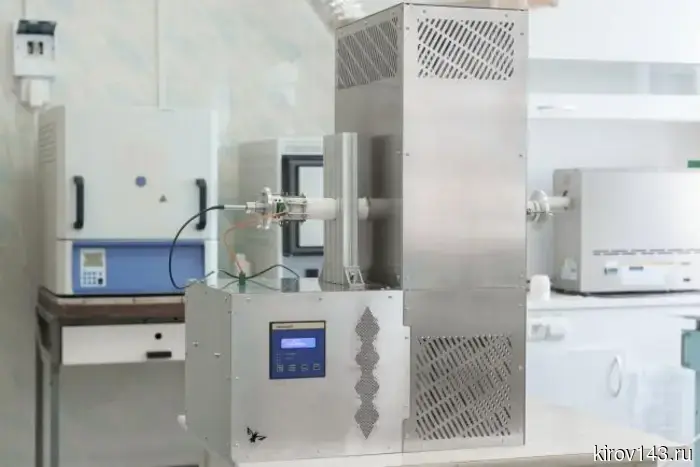 «Приоритет-2030»: исследователи ВятГУ разработали дилатометр для анализа при высоких температурах.
«Приоритет-2030»: исследователи ВятГУ разработали дилатометр для анализа при высоких температурах.
«Приоритет-2030»: исследователи ВятГУ разработали дилатометр для анализа при высоких температурах.
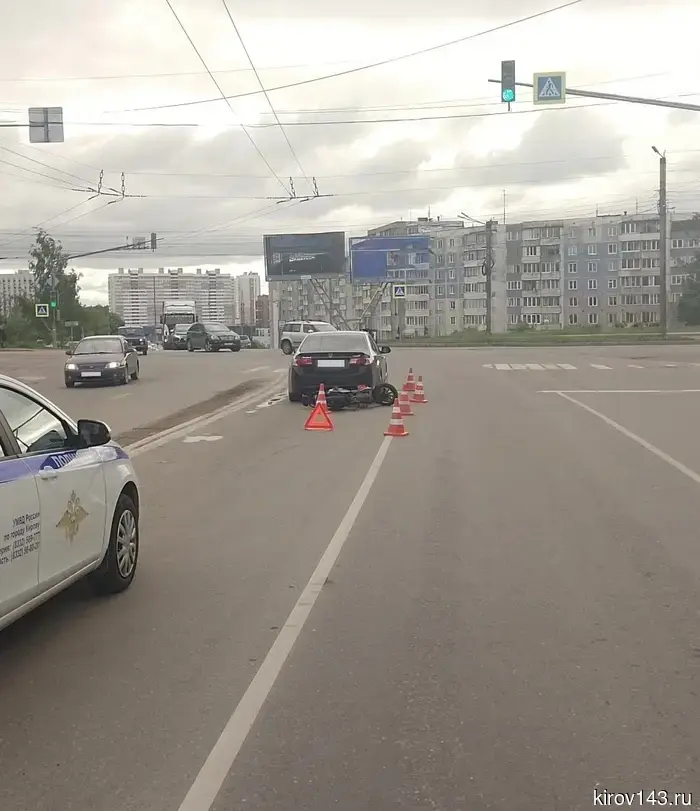 18-летний водитель электровелосипеда пострадал в аварии в Кирове.
Во вторник, 2 июня, в 15:05 на Московской улице в городе Киров произошло столкновение между электровелосипедом «Лиминг», которым управлял 18-летний юноша, и автомобилем «Хонда Аккорд», за рулем которого находился 44-летний водитель. По предварительным данным сотрудников ГИБДД по Кировской области, в результате дорожно-транспортного происшествия...
18-летний водитель электровелосипеда пострадал в аварии в Кирове.
Во вторник, 2 июня, в 15:05 на Московской улице в городе Киров произошло столкновение между электровелосипедом «Лиминг», которым управлял 18-летний юноша, и автомобилем «Хонда Аккорд», за рулем которого находился 44-летний водитель. По предварительным данным сотрудников ГИБДД по Кировской области, в результате дорожно-транспортного происшествия...
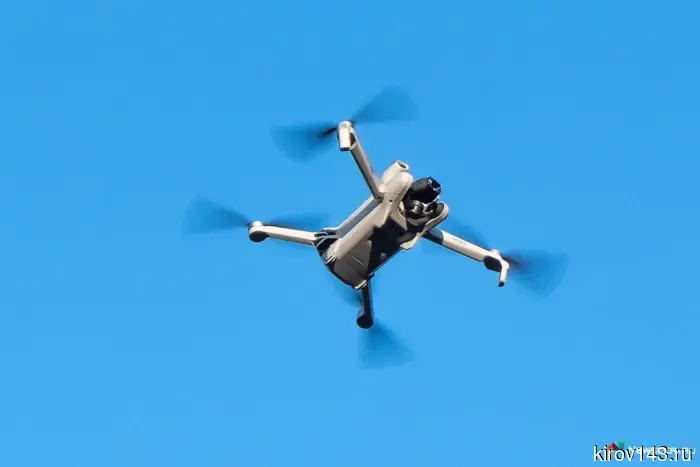 Banks and cash collectors are allowed to shoot down drones.
The Federation Council approved a law that allows employees of certain organizations to disrupt the operation of drones to protect secured facilities.
Banks and cash collectors are allowed to shoot down drones.
The Federation Council approved a law that allows employees of certain organizations to disrupt the operation of drones to protect secured facilities.
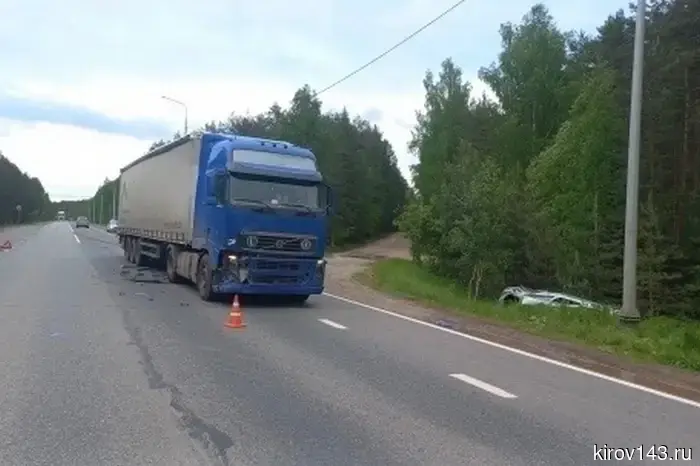 В Кирово-Чепецком районе иномарка съехала с дороги после аварии с грузовиком.
Во вторник, 2 июня, в 16:35 в Кирово-Чепецком районе перевернулся легковой автомобиль после столкновения с грузовиком. По предварительным данным сотрудников ГИБДД Кировской области, на 28-м километре трассы «Киров – Советск – Яранск» произошло столкновение с грузовым автомобилем «Вольво».
В Кирово-Чепецком районе иномарка съехала с дороги после аварии с грузовиком.
Во вторник, 2 июня, в 16:35 в Кирово-Чепецком районе перевернулся легковой автомобиль после столкновения с грузовиком. По предварительным данным сотрудников ГИБДД Кировской области, на 28-м километре трассы «Киров – Советск – Яранск» произошло столкновение с грузовым автомобилем «Вольво».
"Priority-2030": VyatSU scientists have created a dilatometer for high-temperature analysis
The development allows for the study of the behavior of ceramics, metals, and glasses under controlled conditions and temperatures reaching 1400 °C.