
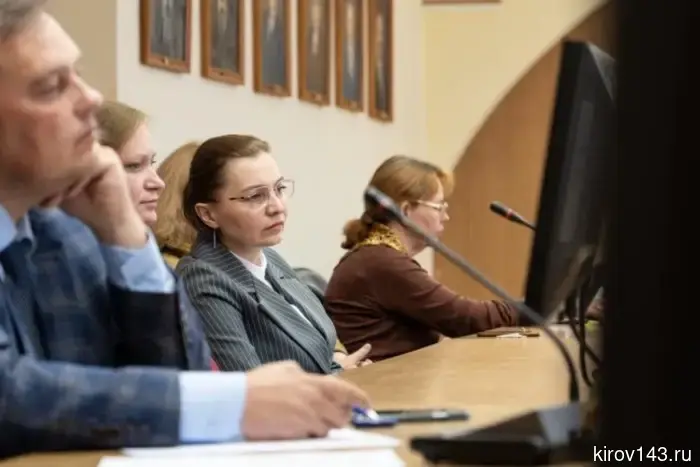
Teachers of VyatGU discussed teaching methods for the fundamentals of Russian statehood with colleagues from other universities in the Volga Federal District.
The supporting NMC for the development of the content of the module "Fundamentals of Russian Statehood" and mechanisms for its implementation at VyatGU continues a series of events on relevant issues with the participation of university teachers from the Volga Federal District and other regions of the country, representatives of the "DNA of Russia" project.
On May 29, a round table titled "Teaching Methods for the Course 'Fundamentals of Russian Statehood' Considering the Historical and Cultural Specifics of the Region" took place. Preceding the event, the director of the support center, Andrey Semenov, associate professor of the Department of Theory and History of State and Law at VyatGU, noted:
"The issue of including regional themes in the sections of the course 'Fundamentals of Russian Statehood' is very important. It is through familiarization with the region, its history, culture, and traditions that students develop an emotionally positive attitude towards their homeland, and through that, a sense of patriotism and belonging to all of Russia.
Another important point is related to such a value constant as the unity of diversity. As students become acquainted with the diverse cultures, traditions, and characteristics of the peoples living in our country and its regions, they simultaneously understand that amidst such 'variegation' there exists a common, unified essence defined by the traditional spiritual and moral values inherent to the people of Russian civilization as a whole." One of the key contributions was made by Professor Sergey Dianov from the Department of Public Administration and History at Perm National Research Polytechnic University. He thoroughly examined the geocultural approach in the course of the fundamentals of Russian statehood. Making a historical excursion into the formation of the geocultural approach, Sergey Alexandrovich paid special attention to the modern stage. The lecturer named the basic concepts of geocultural discourse and characterized the most significant scientific studies, including those conducted at the PNIUPU site.
After discussing the theoretical aspects, Sergey Dianov analyzed the methodological apparatus. In his reflections, he emphasized that the updated concept of the fundamentals of Russian statehood fully allows for the adaptation of the course to the needs of the region. In classes on ORG, the speaker shared, a wide range of tools from the geocultural approach can be applied.
The presentation by the scholar from Perm sparked lively discussion among participants—both those present on-site and those who joined online. Elena Shcherbinina, acting head of the Department of Russian Language, Speech Culture, and Teaching Methods, and acting head of the Department of Russian and Foreign Literature and Teaching Methods at VyatGU, provided an extensive commentary.
"I see two key advantages of the geocultural approach within the framework of ORG.
Firstly, the geocultural approach is a wonderful way to present the region not as an isolated territory but as a unique part of the all-Russian civilization.
It is important to help the student understand why such cultural features, crafts, and character have developed in the region and how this complements the overall picture of our vast country. The region is strong because it is part of Russia, and Russia is rich in the diversity of its regions.
When talking about local heroes of labor, science, and war, it is important to emphasize the idea that the feat in the locality benefits the entire country. This is necessary for the student to realize that by making discoveries or defending borders in their region, they are also protecting and building all of Russia.
Secondly, the geocultural approach allows for the use of methodological techniques of co-participation in living the material.
For example, when students explore a university, a street, or a local enterprise in conjunction with key milestones in the history of Russia, it transforms abstract statehood into a personal, deeply experienced story," noted Elena Vasilievna. Discussion participants also emphasized that the ORG course should not turn into local studies. Furthermore, the federal agenda must be taken into account.
The issues of integrating the regional component into the teaching of the course on the fundamentals of Russian statehood, considering the historical and cultural specifics of the region, were reflected in a number of other presentations.
Другие Новости Кирова (НЗК)
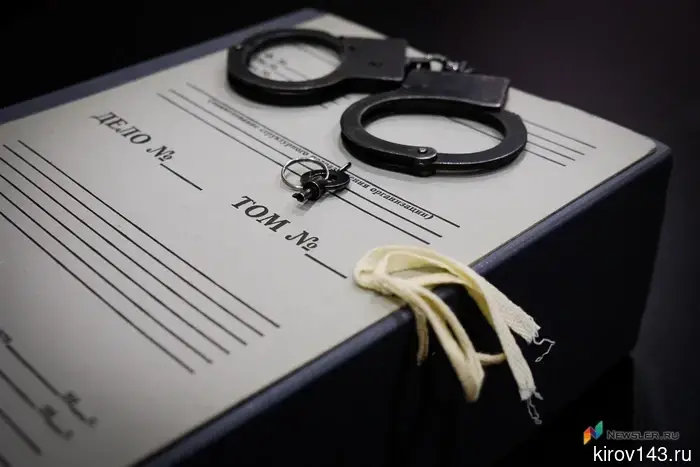 Children's rights were violated more than 4,000 times in 2026.
In 2026, the prosecutor's office of the Kirov region identified over 4,000 violations of laws concerning minors.
Children's rights were violated more than 4,000 times in 2026.
In 2026, the prosecutor's office of the Kirov region identified over 4,000 violations of laws concerning minors.
 If all the juice and ice cream from the PFO were given to children — half a kilo and three liters per month per child.
The Volga Federal District has become a leader in Russia in juice production and remains in the top three for ice cream. Analysts recalculated the industrial volumes per minor — it turned out to be 500–600 grams of dessert and three liters of beverages per month for each.
If all the juice and ice cream from the PFO were given to children — half a kilo and three liters per month per child.
The Volga Federal District has become a leader in Russia in juice production and remains in the top three for ice cream. Analysts recalculated the industrial volumes per minor — it turned out to be 500–600 grams of dessert and three liters of beverages per month for each.
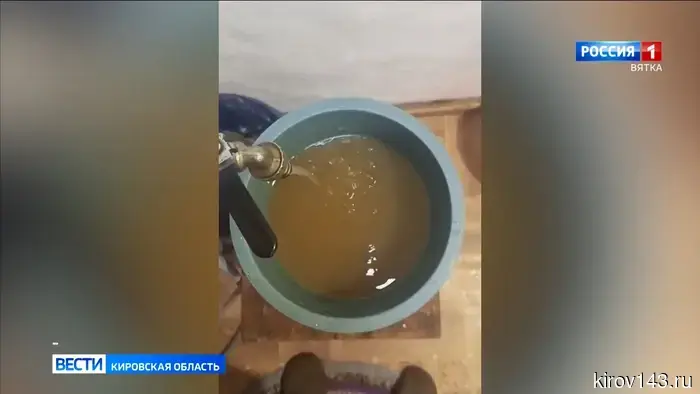 В населённом пункте Речном Опаринского района занимаются решением вопроса водоснабжения.
После установки нового насоса на одной из скважин качество воды, поступающей в дома жителей двух улиц, стало неудовлетворительным. На этих улицах расположено 20 жилых домов, в которых живут пенсионеры и семьи с детьми. Согласно информации Народного фронта, который получил обращение от местных жителей, ситуация вызывает обеспокоенность.
В населённом пункте Речном Опаринского района занимаются решением вопроса водоснабжения.
После установки нового насоса на одной из скважин качество воды, поступающей в дома жителей двух улиц, стало неудовлетворительным. На этих улицах расположено 20 жилых домов, в которых живут пенсионеры и семьи с детьми. Согласно информации Народного фронта, который получил обращение от местных жителей, ситуация вызывает обеспокоенность.
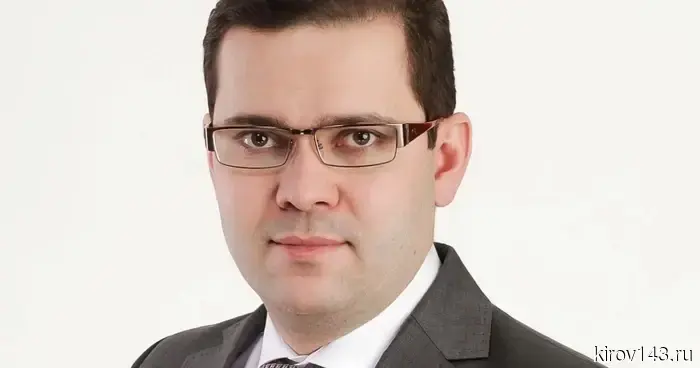 Борис Веснин выразил благодарность жителям области за их поддержку на предварительном голосовании.
Борис Веснин выразил благодарность жителям области за оказанную поддержку на предварительных выборах.
Борис Веснин выразил благодарность жителям области за их поддержку на предварительном голосовании.
Борис Веснин выразил благодарность жителям области за оказанную поддержку на предварительных выборах.
 Региональный кадровый центр запустил горячую линию по вопросам наставничества в медицине.
Региональный кадровый центр запустил горячую линию по вопросам наставничества в области медицины.
Региональный кадровый центр запустил горячую линию по вопросам наставничества в медицине.
Региональный кадровый центр запустил горячую линию по вопросам наставничества в области медицины.
 В кировских школах выпускные экзамены начнутся с 1 июня.
В этом году более 2600 выпускников 11-х классов будут сдавать ЕГЭ. Первые экзамены стартуют в понедельник, 1 июня. Историю выбрали 381 ученик, литературу — 168, химию — 376 школьников. 4 июня выпускникам предстоит пройти обязательный экзамен по русскому языку. На 8 июня...
В кировских школах выпускные экзамены начнутся с 1 июня.
В этом году более 2600 выпускников 11-х классов будут сдавать ЕГЭ. Первые экзамены стартуют в понедельник, 1 июня. Историю выбрали 381 ученик, литературу — 168, химию — 376 школьников. 4 июня выпускникам предстоит пройти обязательный экзамен по русскому языку. На 8 июня...
Teachers of VyatGU discussed teaching methods for the fundamentals of Russian statehood with colleagues from other universities in the Volga Federal District.
The round table took place at the site of the supporting scientific and methodological center for the development of the content of the module "Fundamentals of Russian Statehood" and the mechanisms for its implementation at Vyatka State University.