
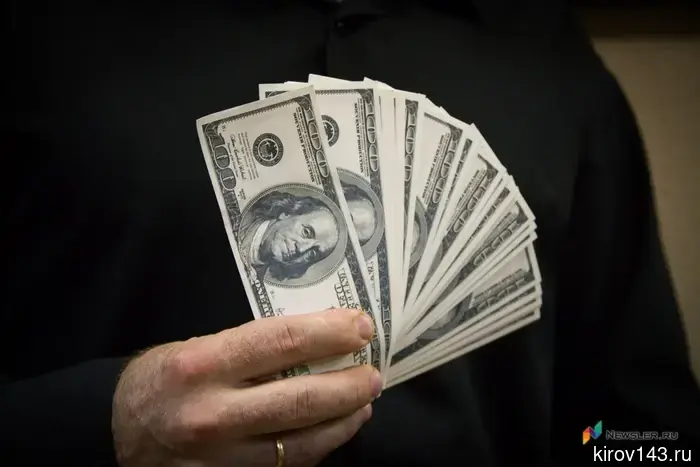
Summer forecast: what will happen to the ruble, oil, and prices in stores
Between Oil and Geopolitics
One expert believes that the current strengthening of the ruble may be temporary. According to his assessment, in the summer the Russian currency is likely to start gradually weakening. The basic range for the summer is 77–85 rubles per dollar and approximately 90–98 rubles per euro.
The main factor the expert cites is the situation around the Strait of Hormuz: if oil supply restrictions remain and oil prices stay high, the ruble may hold closer to the lower bounds of the ranges. However, with a normalization of the situation and a correction in oil prices, the exchange rate may shift towards the upper bounds.
A more optimistic scenario is held by another expert — Associate Professor of the Department of Strategic and Innovative Development at the Financial University under the Government of the Russian Federation, Mikhail Khachaturyan. In his opinion, the oil market is already creating extremely favorable conditions for the Russian currency. This strengthening of the ruble against the dollar and euro is due to the ongoing "price rally" in the global oil market.
"The price of Russian Urals crude oil is not trading at a discount of 20–30 dollars to the price of Brent crude, that is, in the range of 20–30 dollars per barrel, as it was at the end of February 2026 (essentially at the cost of its extraction), but with a premium of 15–20 dollars per barrel. Considering that the price of a barrel of Brent oil today is trading on the exchange at 107–109 dollars, the exchange price is at the level of 102–105, while the actual price of our oil, at which it is shipped, fluctuates in the range of 117–120 dollars per barrel," Khachaturyan is quoted as saying by karelinform.ru.
In light of this, the volumes of revenue to the federal budget from the mineral extraction tax are increasing, as Russian oil companies are forced to increase, rather than decrease (as was the case in February), oil production volumes. The volumes of foreign currency earnings that energy companies bring to the currency market for paying the same mineral extraction tax and profit tax are also rising. According to the expert's forecasts, the ruble will continue to move towards 70–71 rubles per dollar and 84–86 rubles per euro during the summer.
The Influence of the Strait of Hormuz
The Strait of Hormuz remains one of the main factors of uncertainty for the global market. A significant portion of global oil exports passes through it, and any restrictions on the movement of vessels automatically push prices up.
According to Mikhail Khachaturyan, the likelihood of a full-fledged deal between the US and Iran is currently extremely low. The expert considers the most likely scenario to be a protracted crisis, during which disruptions in the operation of the strait will persist for a long time. An additional risk the expert cites is the possibility of a new round of conflict involving Israel and the US. In this case, oil prices could rise even further.
"Oil prices are likely to surpass the psychological mark of 120–130 dollars per barrel by mid-summer," predicts the economist. According to him, if the conflict drags on, prices could approach even 150 dollars per barrel by autumn.
What Will Become More Expensive and Cheaper
If the scenario of moderate weakening of the ruble, mentioned by the first expert, is realized, buyers of imported goods will feel it the most. "The weakening of the ruble primarily affects the cost of imported goods and services," comments the expert.
At the same time, Mikhail Khachaturyan, on the contrary, predicts seasonal deflation. Summer is traditionally accompanied by a decrease in prices for vegetables and fruits due to the new harvest. This year, according to his assessment, prices for them may decrease on average by 0.8–1.2%. Food prices in general may also decrease slightly — by about 0.4–0.6%.
The influence of the national currency's exchange rate in this case will also be felt in the food market. According to Khachaturyan's forecast, there may be a decrease in prices for butter, imported wines, juices, and others, which will add another 0.3–0.4% to the overall deflationary trend. In the non-food sector, clothing and footwear may noticeably decrease in price — by 0.4–0.7%.
Electronics and household appliances, despite the strengthening of the ruble, are unlikely to become significantly more affordable. The reason is the sanctions risks, expensive logistics, and technological fees. Here, the possible price decrease is estimated at only 0.2–0.3%. A separate situation is developing in the automotive market.
"Prices for imported cars may indeed start to decline, but due to existing regulations, including recycling fees and potential restrictions on manufacturers from friendly and neutral countries. In the context of possible secondary sanctions, the price decrease is unlikely to exceed 1–3% depending on the brand and class of imported cars," notes the economist.
Другие Новости Кирова (НЗК)
 В Кировской области будут отмечать «Праздник русской берёзки».
Фестиваль «Праздник русской березки» состоится 30 мая на берегу реки Молома в одноименном селе Опаринского района. Как сообщили в правительстве области, это мероприятие пройдет в третий раз и объединит местных жителей, гостей и артистов. Фестиваль посвящен традициям, обычаям и истории данного праздника.
В Кировской области будут отмечать «Праздник русской берёзки».
Фестиваль «Праздник русской березки» состоится 30 мая на берегу реки Молома в одноименном селе Опаринского района. Как сообщили в правительстве области, это мероприятие пройдет в третий раз и объединит местных жителей, гостей и артистов. Фестиваль посвящен традициям, обычаям и истории данного праздника.
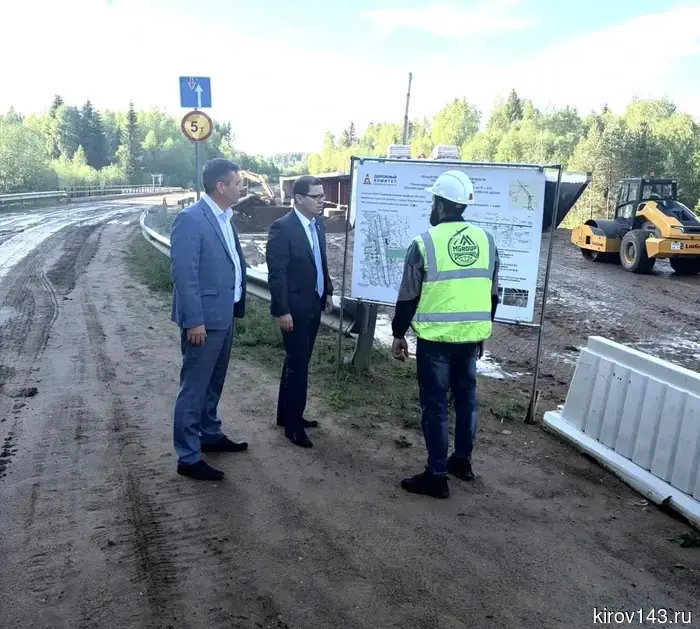 Boris Vesnin: "The scale of road construction in the northwest of the region is impressive!"
Deputy of the Legislative Assembly of the Kirov Region Boris Vesnin assessed the pace of road works during his trip to the Podosиновsky and Luzsky districts.
Boris Vesnin: "The scale of road construction in the northwest of the region is impressive!"
Deputy of the Legislative Assembly of the Kirov Region Boris Vesnin assessed the pace of road works during his trip to the Podosиновsky and Luzsky districts.
 В интернете появятся ещё 5 способов поддержки участников СВО.
Сегодня на оперативном совещании под руководством губернатора Александра Соколова была рассмотрена цифровизация мер поддержки для участников специальной военной операции и их семей. Главная цель — перевести все льготы в электронный формат, чтобы граждане могли получать помощь без необходимости посещать государственные учреждения. Кировская область.
В интернете появятся ещё 5 способов поддержки участников СВО.
Сегодня на оперативном совещании под руководством губернатора Александра Соколова была рассмотрена цифровизация мер поддержки для участников специальной военной операции и их семей. Главная цель — перевести все льготы в электронный формат, чтобы граждане могли получать помощь без необходимости посещать государственные учреждения. Кировская область.
 Кировчан зовут присоединиться к Международным молодёжным «Циолковским чтениям».
С 22 по 24 октября в Кирове на территории Музея К.Э. Циолковского, авиации и космонавтики состоятся «Циолковские чтения». Как сообщили в региональном министерстве культуры, в 2026 году данное масштабное мероприятие будет приурочено к 90-летию Кировской области. Участникам предложат поработать в 8 тематических секциях, а также встретиться с космонавтами.
Кировчан зовут присоединиться к Международным молодёжным «Циолковским чтениям».
С 22 по 24 октября в Кирове на территории Музея К.Э. Циолковского, авиации и космонавтики состоятся «Циолковские чтения». Как сообщили в региональном министерстве культуры, в 2026 году данное масштабное мероприятие будет приурочено к 90-летию Кировской области. Участникам предложат поработать в 8 тематических секциях, а также встретиться с космонавтами.
 Putin signed a law on the write-off of credit debts for participants of the special military operation.
This measure also applies to family members.
Putin signed a law on the write-off of credit debts for participants of the special military operation.
This measure also applies to family members.
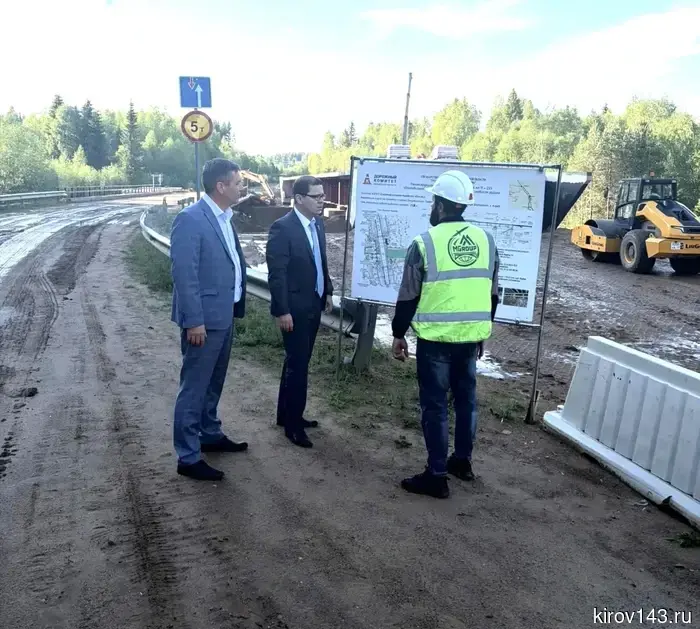 Boris Vesnin: "The scale of road construction in the northwest of the region is impressive!"
Deputy of the Legislative Assembly of the Kirov Region Boris Vesnin assessed the pace of road works during his trip to the Podosinovsky and Luzsky districts.
Boris Vesnin: "The scale of road construction in the northwest of the region is impressive!"
Deputy of the Legislative Assembly of the Kirov Region Boris Vesnin assessed the pace of road works during his trip to the Podosinovsky and Luzsky districts.
Summer forecast: what will happen to the ruble, oil, and prices in stores
In the summer, the exchange rate of the ruble will mainly depend on oil prices and the geopolitical situation around the Strait of Hormuz. Experts provide different forecasts: from moderate weakening to further strengthening of the Russian currency. In any case, changes in the exchange rate will be reflected in prices — for imports, technology, and some food products. Let's delve into the details.