
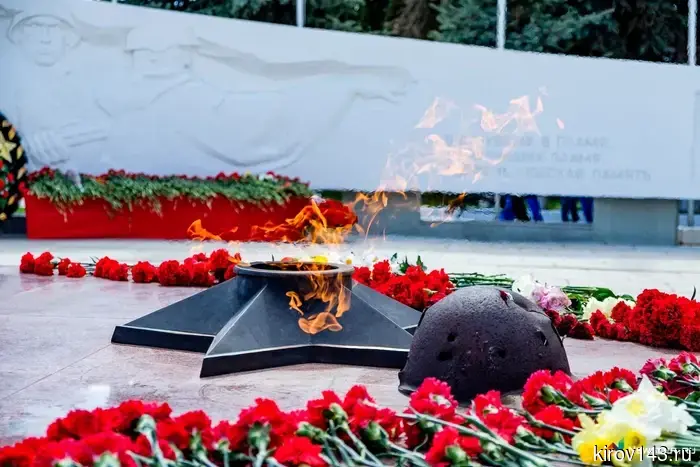
A big contribution from a small town
At noon on June 22, 1941, the speech of the People's Commissar for Foreign Affairs of the USSR, Vyacheslav Molotov, echoed from the street loudspeakers in Kirov, as in cities across the Soviet Union. Thousands of Kirov residents, frozen in front of the loudspeakers, listened with anxiety and excitement to the terrible news: on the night of June 22, Nazi Germany attacked the Soviet Union without declaring war.
"Crush the beast!"
The very next day, June 23, 1941, a mass city rally took place in Kirov, attended by about 40,000 Kirov residents according to various reports. At this rally, as reported by local newspapers of the time, the words were spoken: "Crush the beast! This will be the most just war... We will win!" In the first week of the war, more than 3,200 applications for sending volunteers to the front were received by the Kirov military enlistment offices, including over 1,000 applications from women.
In total, during the years of the Great Patriotic War, the Kirov region sent more than 584,000 people to the front. If we compare this with the population of the city of Kirov in 2024 — 475,464 people — then all the citizens went to the front to "fight the German beast" and defend the independence and freedom of their Motherland. Every single one of them. But these are just the volunteers. Taking into account the career military personnel from the Kirov region, more than 600,000 people went to the front — every fourth resident of the region. Of these, more than 253,000 fighters did not return home, having given their lives on the battlefields against Nazism.
In Kirov, two famous divisions were formed — the 311th and the 355th rifle divisions. However, their fates on the front lines turned out differently: the 311th went through the entire war, meeting Victory in Germany, while the fate of the 355th was short and tragic — in 1942 it was destroyed in the Rzhev cauldron.
From Vyatka to Elbe
The formation of the division, which later became known as the 311th rifle division, began in mid-July 1941. Initially, the division was a people's militia, but soon it received its general military number, under which it fought throughout the war, driving the German-fascist invaders from their native land.
Virtually all personnel of the 311th rifle division were residents of the Kirov region. A significant portion of the fighters were civilians without military experience. The backbone of the special units consisted of cadets from military schools.
By mid-August, the division entered battle near Chudovo in the Novgorod region. Engaging in an unequal fight against superior fascist forces, the division lost more than 8,000 men killed and missing in just four days of fighting. The remaining fighters participated in the Siege of Leningrad, including the defense of the famous "Road of Life" across Lake Ladoga, which supplied provisions to the besieged city and evacuated its residents.
In 1944-1945, the division participated in the liberation of the Pskov and Novgorod regions, Belarus, the Baltic states, and Poland, completing its combat path in May 1945 on the banks of the Elbe, ensuring the encirclement and storming of Berlin. The price of Victory for this division turned out to be enormous: according to various estimates, about 90% of the personnel of the 311th rifle division perished or went missing during the years of the Great Patriotic War.
The feat of the Kirov resident and the tragedy near Rzhev
The 355th rifle division was also almost entirely formed from Kirov residents: about 11,000 residents of the city of Kirov and the Kirov region joined its ranks, many of whom were already family men of older ages — over 30 and 40 years old. The division began to form in the fall of 1941, and by the summer of 1942, almost its entire composition perished during the Battle of Rzhev.
The division was sent to the front line at the height of the battle for Moscow — on November 7, 1941. By December, it was included in the composition of the 39th Army of the Kalinin Front and participated in the winter counteroffensive, liberating dozens of settlements in the Kalinin (now Tver) and Smolensk regions.
Among the soldiers of the 355th rifle division was Yakov Paderin, a native of the Kirov region. On December 27, 1941, near the village of Ryabinikha, Private Yakov Nikolayevich covered the enemy machine gun embrasure with his body, ensuring the completion of the combat mission at the cost of his own life. For this feat, Yakov Paderin was posthumously awarded the title of Hero of the Soviet Union.
Continuing its liberation campaign, the 355th rifle division was encircled during the Rzhev-Sychev operation in the summer of 1942 and was almost completely destroyed, after which it was disbanded. Of more than 11,000 Kirov residents who fought in the 355th rifle division, only a few hundred fighters survived.
The industrial feat of children
During the Great Patriotic War, Kirov became the largest evacuation center. More than a hundred factories and plants were evacuated to our remote area from Moscow, Leningrad, and Odessa. Enterprises were assembled in the open air and launched machines in record time. For example, the current "Avitek" plant was initially just machines in the open air, and only later did walls begin to be built around it.
Throughout the war years, Kirov provided the front with more than 4,000 T-60 and T-34 tanks, over 4,000 "Katyushas," millions of shells, F-1 grenades, aerial bombs, and numerous mortars, torpedo boats, aeronautical sleds, and optical devices. Tanning and footwear enterprises produced boots, fur coats, hats, and mittens for the army.
The production of weapons and the provision of the front with what was necessary, what brought Victory closer for the Soviet people, fell heavily on the shoulders of children, women, and the elderly. Adult men who went to the front were replaced at the machines by teenagers aged 12 to 14. They worked for 12 hours, exceeding norms by 6-7 times. Often, children simply could not reach the machines and worked standing on boxes placed next to the machines.
The current "Avitek," then — Plant No. 32 — was evacuated to Kirov in late autumn 1941. Without completing the installation of the machines, the plant received an urgent order from the front. And already in early December, it shipped the first batch of products to the front — 50,000 anti-tank grenades. Grenades made by teenagers, practically children, under the most difficult conditions, in the open air, in the frost.
From the beginning of 1942, the plant returned to its main specialization — the production of aviation weapons. During the Great Patriotic War, the enterprise became the main supplier of small arms and bombing weapons for the Red Army. The units produced at Plant No. 32 were equipped in almost all Soviet bomber aviation. In total, the enterprise manufactured more than 40 types of military products. In the victorious year of 1945 for the Soviet Union, the plant was awarded the Order of the Red Banner of Labor.
Not only the industry of Kirov became a reliable rear support for the front. Vyatka peasants also made their huge contribution to the future Victory: all collective farms were mobilized, and the fresh harvest was sent to the front. Despite the fact that the peasants themselves often starved. But they could not do otherwise: there, on the battlefields under the roar of artillery, under mortar fire, in the trenches, overcoming cold, dampness, fear, inhuman conditions, and death, fought their fathers, brothers, sons, and husbands.
The residents of the Kirov region helped the front with everything they could, often doing the impossible. Kirov residents collected warm clothes for the front-line soldiers, sent gifts to the front, and cared for the wounded and the families of servicemen.
Not just numbers
250,000 Kirov residents perished — only on the battlefields. Without accounting for losses among the civilian population of Kirov and the region, who died from hunger, disease, cold, and unbearable hard work. 3 million shells, 5 million mines and aerial bombs, 33 million grenades, 200 ships, 2 million mortars, more than 2.5 million rifles, aviation and other equipment, 13 million pairs of shoes, and 700,000 fur coats. Behind these and other impressive figures stand hundreds of thousands of lives of ordinary people, whose fates were forever turned upside down by that terrible war.
Hundreds of thousands of Kirov residents, for whom the battlefield became work at machines, in fields, in hospitals, where wounded Red Army fighters were treated. Hundreds of thousands of Kirov residents who, overcoming themselves, did everything possible and impossible to hear the long-awaited and hard-earned word "
Другие Новости Кирова (НЗК)
 В «Быстрице» состоялся чемпионат Кировской области по плаванию.
В Быстрице состоялся чемпионат Кировской области по плаванию. В данном турнире выступили около двухсот спортсменов. Юниоры и юниорки соревновались за место в сборной команды региона. Дальше о событии расскажет Дарья Якименко. Их основной цель – улучшить собственные рекорды, стать быстрее и сильнее. Федора Исупова сегодня ожидала
В «Быстрице» состоялся чемпионат Кировской области по плаванию.
В Быстрице состоялся чемпионат Кировской области по плаванию. В данном турнире выступили около двухсот спортсменов. Юниоры и юниорки соревновались за место в сборной команды региона. Дальше о событии расскажет Дарья Якименко. Их основной цель – улучшить собственные рекорды, стать быстрее и сильнее. Федора Исупова сегодня ожидала
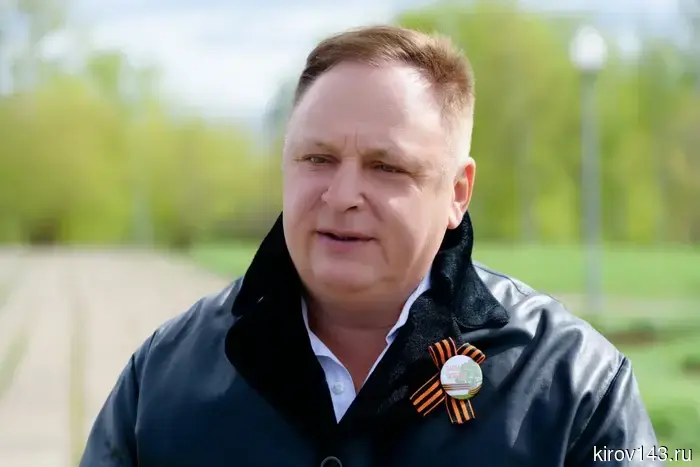 Oleg Valenchuk congratulated the Kirov residents on Victory Day.
Dear fellow countrymen!
Oleg Valenchuk congratulated the Kirov residents on Victory Day.
Dear fellow countrymen!
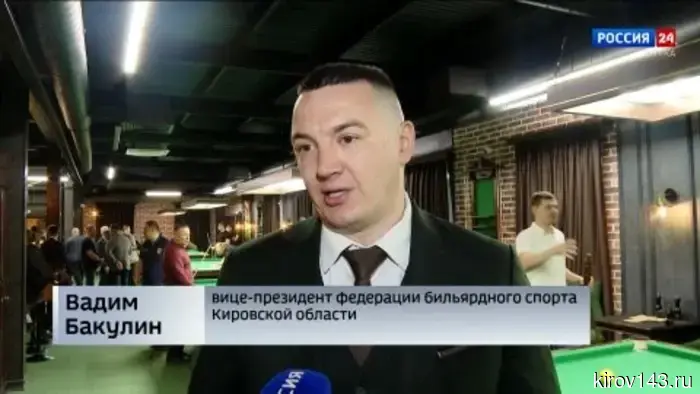 Киров впервые становится местом проведения парных турниров по бильярду.
Киров впервые становится местом для проведения парных соревнований по бильярду. Для определения сильнейших участников в областной центр прибыли спортсмены из 10 регионов страны. Особенностью турнира является то, что за бильярдными столами находятся представители адвокатской профессии страны. Традиции организации бильярдных турниров среди
Киров впервые становится местом проведения парных турниров по бильярду.
Киров впервые становится местом для проведения парных соревнований по бильярду. Для определения сильнейших участников в областной центр прибыли спортсмены из 10 регионов страны. Особенностью турнира является то, что за бильярдными столами находятся представители адвокатской профессии страны. Традиции организации бильярдных турниров среди
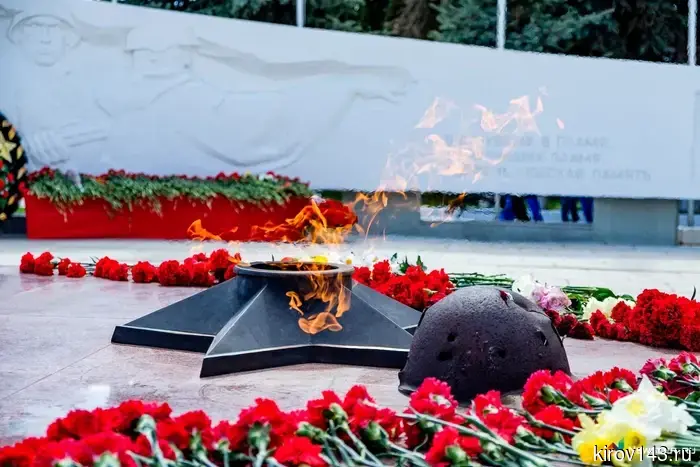 A big contribution from a small town
That Sunday afternoon forever changed Kirov's life. The rear city, where the sounds of battle did not reach, suddenly felt all the horrors of this terrible and bloody war. And the city not only endured. It became a true worker, transformed into a powerful arsenal and hospital base for the country.
A big contribution from a small town
That Sunday afternoon forever changed Kirov's life. The rear city, where the sounds of battle did not reach, suddenly felt all the horrors of this terrible and bloody war. And the city not only endured. It became a true worker, transformed into a powerful arsenal and hospital base for the country.
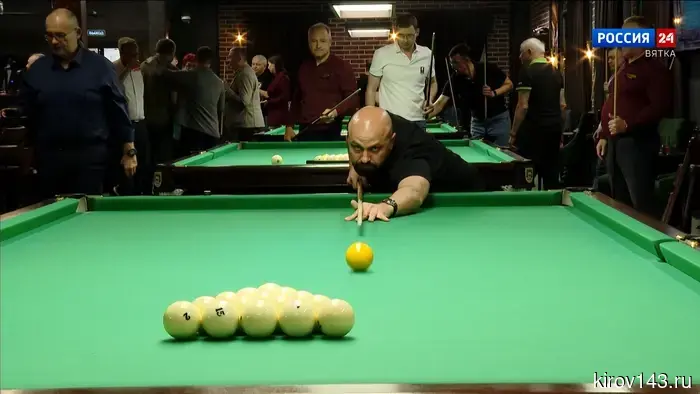 Киров впервые выступает в качестве места проведения парных турниров по бильярду.
Киров впервые становится местом проведения парных соревнований по бильярду. Чтобы выявить лучших игроков, в областной центр прибыли спортсмены из 10 регионов России. Особенностью турнира является участие представителей адвокатского сообщества страны за бильярдными столами. Традиции организации бильярдных турниров среди
Киров впервые выступает в качестве места проведения парных турниров по бильярду.
Киров впервые становится местом проведения парных соревнований по бильярду. Чтобы выявить лучших игроков, в областной центр прибыли спортсмены из 10 регионов России. Особенностью турнира является участие представителей адвокатского сообщества страны за бильярдными столами. Традиции организации бильярдных турниров среди
 В «Быстрице» состоялся чемпионат Кировской области по плаванию.
В Быстрице состоялся чемпионат Кировской области по плаванию. В этом турнире участвовали порядка двухсот плавцов. Юниоры и юниорки сражались за места в сборной региона. Продолжит эту тему Дарья Якименко. Их основная задача – улучшить собственные рекорды, стать быстрее и сильнее. Федора Исупова сегодня ожидало...
В «Быстрице» состоялся чемпионат Кировской области по плаванию.
В Быстрице состоялся чемпионат Кировской области по плаванию. В этом турнире участвовали порядка двухсот плавцов. Юниоры и юниорки сражались за места в сборной региона. Продолжит эту тему Дарья Якименко. Их основная задача – улучшить собственные рекорды, стать быстрее и сильнее. Федора Исупова сегодня ожидало...
A big contribution from a small town
That Sunday afternoon forever changed Kirov's life. The rear city, where the sounds of battle did not reach, suddenly felt all the horrors of this terrible and bloody war. And the city not only endured. It became a true worker, transformed into a powerful arsenal and hospital base for the country.