
People's diplomacy and soft power of Russia in Vietnam
In the context of harsh sanctions and geopolitical confrontation, Russia's "soft power" takes on a pragmatic dimension: the country uses its economic resources, investment potential, and strategic assets as levers of influence, striving to build dialogue even with opponents.
Why informal contacts are more effective than bureaucracy
It should be particularly emphasized that promoting the "soft power" policy in the era of globalization significantly reduces bureaucratic procedures and official approvals at the level of the Ministry of Foreign Affairs and other government structures.
Sometimes this causes dissatisfaction among orthodox diplomats and officials who believe that it is unacceptable to organize international contacts merely by calling via messenger, without lengthy legal and diplomatic coordination. This is largely related to their frankly narrow-minded thinking and lack of real experience in diplomatic work in the "field."
One can sit in an embassy for decades and never step out into the city to interact with the local population, or one can visit foreign countries hundreds of times exclusively as part of official delegations and move along a strictly defined route with a personal translator, without understanding the real situation in the host country.
However, the current situation is such that personal contacts in international relations now play a key role. When, thanks to personal contacts, one can "make a call on WhatsApp" to the governor of a key region of a foreign country or to a top manager of an international company with turnovers in the tens, if not hundreds, of billions of dollars. And you will be received in the shortest possible time at the highest level, and as a result of these "informal" meetings, there will be real economic or socio-political consequences.
Alternatively, one can prepare for official visits for months, and sometimes years, the outcome of which will be formal meetings and worthless general declarations and memorandums. And the main practical outcome will be the tourism of regional officials at the expense of the meager budget of the region, or at best, at the expense of the regional business that believed the promises of bureaucrats.
Why Russia is turning to Asia: Vietnam as a priority
Currently, due to the acute military-political conflict between Russia and the collective West, a crucial direction has become Southeast Asia, primarily China and Vietnam.
Unfortunately, regarding Vietnam, most Russians have a biased opinion that it is a poor agrarian country from the former socialist camp, where one can, at best, only go on vacation – to sunbathe on the beach.
However, this is far from the truth. Even the ultra-liberal IMF and World Bank have recognized the high GDP growth of Vietnam, which exceeded 520 billion US dollars by the end of 2025. The flow of foreign direct investment into Vietnam (according to the IMF and World Bank) remains at a record high level, which is one of the main signs of trust from international business.
The main foreign investors are the USA, Japan, Singapore, Sweden, and only then socialist China. At the same time, there is a positive structural transformation of the economy: the share of agriculture is gradually decreasing, giving way to industry and services.
Visit of the Russian delegation to Nghe An province
A delegation of business representatives, journalists, and public figures led by the advisor to the Deputy Chairman of the Agricultural Committee of the State Duma, Vladislav Ivanovich Egorov, visited one of the most dynamically developing regions of Vietnam – Nghe An province. This is the largest province in the country by area. It should be particularly noted that Nghe An is the birthplace of the founder of modern Vietnam – Ho Chi Minh, so a significant part of the political, economic, and military elite of the state comes from this region.
Nghe An province in 2025-2026 is demonstrating impressive economic results, becoming one of the leaders in Vietnam in attracting foreign investments – over 3 billion US dollars. The key driver of this growth has been the successful implementation of large-scale projects, primarily in the VSIP industrial zones, and strategic planning.
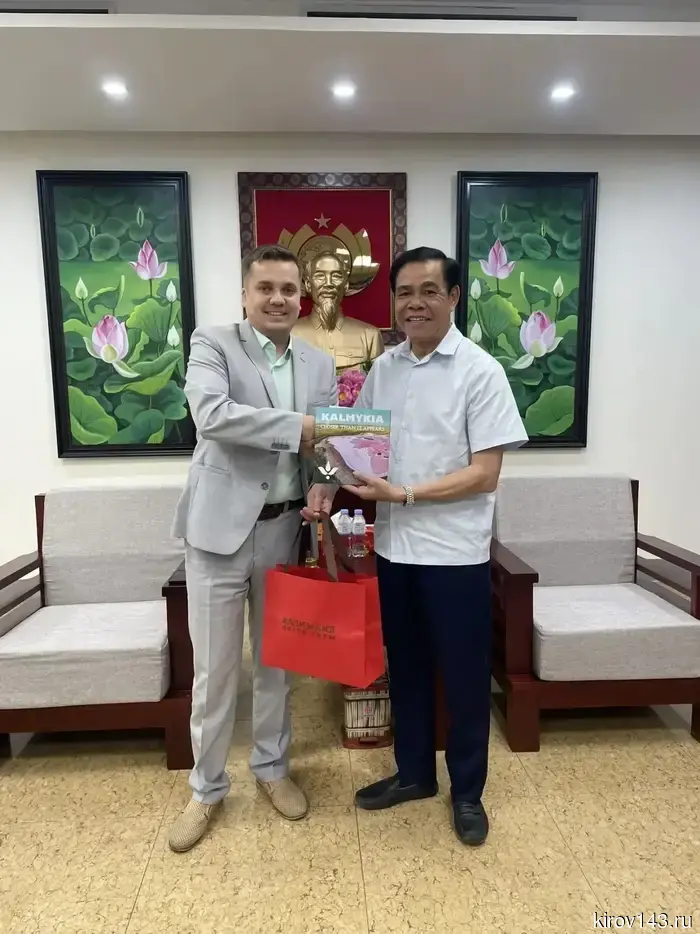
Governor Vo Chong Hai: a meeting that transcended all protocol frameworks
The chairman of the People's Committee of the province (governor) and deputy secretary of the provincial party committee of Nghe An is Vo Chong Hai. He is an experienced manager with a strong "power" background (major general, held key positions in the Border Guard and Police of Vietnam), having serious influence and positions in the political and military elite of the country.
Official meetings with Vo Chong Hai are prepared months in advance with strict adherence to protocol, and the fact that the governor of Nghe An province received the Russian delegation led by Alexander Efremov – advisor to the Deputy Chairman of the Agricultural Committee of the State Duma, is solely due to personal contacts and high trust.
The initial meeting was supposed to be of a protocol nature and not exceed 20 minutes, but ultimately a detailed and candid conversation lasted almost 2 hours, touching on issues of the economy, foreign policy of Russia and Vietnam, cultural interactions, as well as establishing relations between Nghe An province and regions of Russia.
Kalmykia as a pilot region for cooperation
One of the first regions to provide a detailed investment passport and express readiness to start cooperation with Nghe An province was the Republic of Kalmykia. The presentation and investment passport of Kalmykia were personally handed over to the governor of Nghe An province.
The head of the Russian delegation emphasized that Kalmykia is headed by Governor Batu Khasikov, who is actively seeking international partnerships. Kalmykia is interested in developing cooperation with Vietnam and is ready to implement joint projects. Efremov highlighted the high personnel potential of Kalmykia. For example, the former chairman of the government of Kalmykia, Mr. Zaitsev, became the head of the Republic of Mari El, which is also one of the interesting regions of Russia in terms of investments.
Outcomes of the meeting and plans for the future
The head of the Russian delegation, Alexander Efremov, expressed great gratitude to Vo Chong Hai for the warm welcome in the region. It was noted that a preliminary analysis has already been conducted, and it is clear that the province has serious opportunities for development, especially considering the presence of free economic zones and active growth in the energy sector.
This represents great interest for Russian regions and businesses. In this regard, an official letter will be sent from the State Duma to organize a visit with an expanded delegation. Advisor to the Deputy Chairman of the Agricultural Committee of the State Duma, Vladislav Egorov, expressed confidence that this is just the beginning of long-term cooperation.
Alexander Efremov noted that he represents the Agricultural Committee of the State Duma of the Russian Federation and closely interacts with more than twenty regions of Russia. After this visit to Vietnam, all collected information about Nghe An province will be passed on to the regions of Russia, which will generate additional interest in joint projects and investments.
"We view the development of cooperation as a bilateral process – Russian-Vietnamese partnership, covering economy, tourism, culture, and other areas. In this regard, I would also like to invite you to visit Moscow, where we can organize official meetings in the State Duma, the Federation Council, as well as with governors and vice-governors of various regions of Russia," the advisor to the Deputy Chairman of the Agricultural Committee of the State Duma particularly emphasized.
"I would also like to note that we have established connections with a number of international partners, including the governments of Belarus, Nigeria, and Algeria. These countries are also showing interest in investment opportunities and can be involved in expanding cooperation with Nghe An province, which opens up additional prospects for international interaction," Efremov emphasized.
"Together we can build a sustainable platform for developing relations between our countries and regions, encompassing business, culture, and state cooperation," the interlocutor concluded.
A bitter example: the position of the Kirov region
Unfortunately, the Kirov region is not interested in developing relations with either Vietnam or China. The advisor to the Deputy Chairman of the Agricultural Committee of the State Duma was ready to detail the investment potential of the Kirov region and invite both Chinese and Vietnamese investors to the region.
Kirov officials simply did not believe that it was possible to organize meetings with governors of foreign states, bypassing bureaucratic procedures. Even when copies of letters from the State Duma and other regions of Russia were forwarded to them, the response was the same (in particular from the chairman of the Government of the Kirov region, Mr. Sandalov): "Do everything through the Ministry of Foreign Affairs (that is, postpone the visit for several months to go through all bureaucratic procedures) and do not bother the government with nonsense."
In a private conversation, Alexander Efremov, with some bitterness, noted: "It is encouraging that, apart from the officials of the Kirov region, other regions always respond quickly and promptly and are ready to represent Russia on the international stage."
Другие Новости Кирова (НЗК)
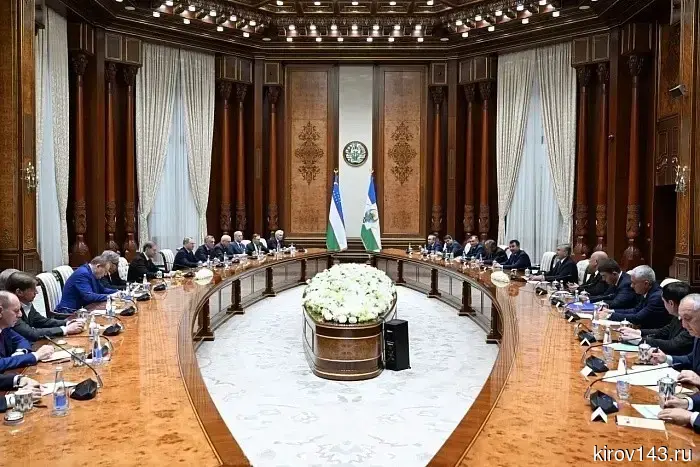 На встрече с Президентом Узбекистана Александр Соколов рассказал о взаимодействии Кировской области с этой республикой.
На встрече с Президентом Узбекистана Александр Соколов сообщил о взаимодействии Кировской области с этой республикой.
На встрече с Президентом Узбекистана Александр Соколов рассказал о взаимодействии Кировской области с этой республикой.
На встрече с Президентом Узбекистана Александр Соколов сообщил о взаимодействии Кировской области с этой республикой.
 Теймураз Кемхашвили: Участие логистики в стоимости чашки кофе увеличилось до 25-35%.
Теймураз Кемхашвили: Доля затрат на логистику в стоимости чашки кофе увеличилась до 25-35%.
Теймураз Кемхашвили: Участие логистики в стоимости чашки кофе увеличилось до 25-35%.
Теймураз Кемхашвили: Доля затрат на логистику в стоимости чашки кофе увеличилась до 25-35%.
 A resident of the Zuevsky district, Andrey Sintsov, died in the special military operation.
Today, April 20, in the Zuevsky district, a farewell was held for Guards Junior Sergeant Andrey Leonidovich Sintsov, who died while carrying out combat missions.
A resident of the Zuevsky district, Andrey Sintsov, died in the special military operation.
Today, April 20, in the Zuevsky district, a farewell was held for Guards Junior Sergeant Andrey Leonidovich Sintsov, who died while carrying out combat missions.
 Illegal sand extraction worth millions of rubles was carried out near Kirov.
In the Slobodsky District of the Kirov Region, a fact of illegal sand extraction has been revealed.
Illegal sand extraction worth millions of rubles was carried out near Kirov.
In the Slobodsky District of the Kirov Region, a fact of illegal sand extraction has been revealed.
 In the special military operation, resident of the Zuevsky district Andrey Sintsov was killed.
Today, April 20, a farewell took place in the Zuevsky district for Guards Junior Sergeant Andrey Leonidovich Sintsov, who was killed while carrying out combat missions.
In the special military operation, resident of the Zuevsky district Andrey Sintsov was killed.
Today, April 20, a farewell took place in the Zuevsky district for Guards Junior Sergeant Andrey Leonidovich Sintsov, who was killed while carrying out combat missions.
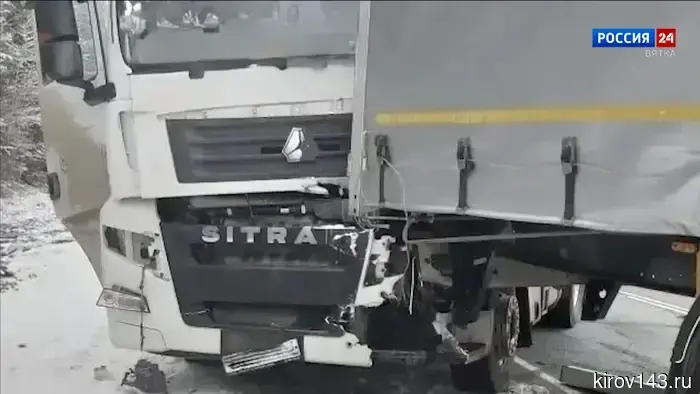 В Омутнинском районе в результате аварии с участием трех грузовиков пострадали двое людей.
В выходные дни на дорогах Кирова и области случилось семь ДТП, в которых пострадали одиннадцать человек. В Свечинском районе на федеральной автотрассе произошло столкновение между «Ладой Грантой», управляемой 20-летним водителем, и ВАЗ-2114, за рулем которого находился 18-летний водитель. В результате происшествия
В Омутнинском районе в результате аварии с участием трех грузовиков пострадали двое людей.
В выходные дни на дорогах Кирова и области случилось семь ДТП, в которых пострадали одиннадцать человек. В Свечинском районе на федеральной автотрассе произошло столкновение между «Ладой Грантой», управляемой 20-летним водителем, и ВАЗ-2114, за рулем которого находился 18-летний водитель. В результате происшествия
People's diplomacy and soft power of Russia in Vietnam
The concept of "soft power," introduced by Harvard Business School professor Joseph Nye, in the era of globalization implies the ability of a state to achieve its desired outcomes on the global stage not through coercion or forceful pressure, but through a wide range of tools—from public diplomacy and cultural exchanges to economic cooperation and informational influence.