

Neurologists explained how to delay Parkinson's disease.
World Parkinson's Disease Day, which took place on April 11, this year drew attention to alarming statistics: over the past 25 years, the number of patients has doubled. Although the exact causes of dopamine neuron degeneration are still not established, specialists highlight three main triggers: age over 60, heredity (about 15% of cases), and contact with pesticides. The latter is believed to affect the mitochondria of cells, which may provoke mutations in the SNCA and LRRK2 genes.
However, what concerns researchers today is not so much the origin of the disease as the possibilities for compensation. The key term gaining popularity in rehabilitation is neuroplasticity. This is the ability of surviving neurons to reorganize and take over the functions of dead cells. Here, regular "brain outings from the comfort zone" are more important than the usual physical exercises.
Doctors recommend unconventional but effective methods: learning new languages, taking different routes to work, brushing teeth with the non-dominant hand, or, for example, memorizing phone numbers manually without relying on AI agents. All of this helps build new neural connections, slowing the development of motor and cognitive impairments.
As for popular myths about protection, such as the benefits of coffee, the data here is ambiguous. Yes, the drink is rich in antioxidants and exhibits neuroprotective properties, but excessive caffeine consumption raises blood pressure and homocysteine levels, which negates potential benefits.
Today, medicine can only offer symptomatic treatment—from dopamine replacement therapy to deep brain stimulation (DBS). It is currently impossible to completely stop the disease; however, physical activity plays a huge role in maintaining quality of life. A special emphasis, as noted by INVITRO specialists, is placed on dance therapy: it improves balance, flexibility, and mood, helping patients more effectively combat motor limitations.
Другие Новости Кирова (НЗК)
 Кировчане начали чаще посещать Нижний Новгород.
Жители Кирова стали чаще посещать Нижний Новгород.
Кировчане начали чаще посещать Нижний Новгород.
Жители Кирова стали чаще посещать Нижний Новгород.
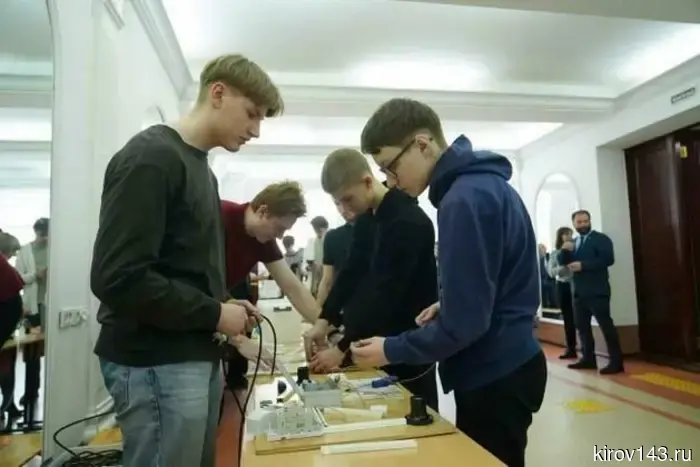 Начинаем подготовку к Единому дню открытых дверей федерального проекта «Профессионалитет» на базе ВятГУ!
Приступаем к проведению Единого дня открытых дверей федерального проекта «Профессионалитет» на базе ВятГУ!
Начинаем подготовку к Единому дню открытых дверей федерального проекта «Профессионалитет» на базе ВятГУ!
Приступаем к проведению Единого дня открытых дверей федерального проекта «Профессионалитет» на базе ВятГУ!
 Инвестнеделя: строительство, рассрочка и долговые обязательства как способ финансирования.
Инвестнеделя: строительство, рассрочки и задолженности как способ финансирования
Инвестнеделя: строительство, рассрочка и долговые обязательства как способ финансирования.
Инвестнеделя: строительство, рассрочки и задолженности как способ финансирования
 Представители ОАО «СтанкоГомель» провели встречу с промышленными предприятиями Кировской области.
Представители ОАО «СтанкоГомель» провели встречу с промышленниками Кировской области.
Представители ОАО «СтанкоГомель» провели встречу с промышленными предприятиями Кировской области.
Представители ОАО «СтанкоГомель» провели встречу с промышленниками Кировской области.
 Православные христиане отпраздновали Пасху.
Накануне православные христиане отмечали Пасху или Воскресение Христово. Праздничные службы состоялись во всех церквях вятской епархии. Наша съёмочная группа побывала на ночном пасхальном богослужении в Храме Пресвятой Богородицы. Смотрите полный репортаж в вечернем выпуске кировских новостей в 21:10.
Православные христиане отпраздновали Пасху.
Накануне православные христиане отмечали Пасху или Воскресение Христово. Праздничные службы состоялись во всех церквях вятской епархии. Наша съёмочная группа побывала на ночном пасхальном богослужении в Храме Пресвятой Богородицы. Смотрите полный репортаж в вечернем выпуске кировских новостей в 21:10.
 Ольга Аверьянова назначена руководителем нового управления Кировской области.
Ольга Аверьянова назначена руководителем нового управления Кировской области.
Ольга Аверьянова назначена руководителем нового управления Кировской области.
Neurologists explained how to delay Parkinson's disease.
In a quarter of a century, the number of patients with Parkinson's disease worldwide has doubled, and the WHO is recording an increase in disability. However, in addition to genetics and pesticides, doctors are increasingly talking about the hidden resource of the brain itself — neuroplasticity. We explore why studying languages and changing your commute route can serve as a shield against neurodegeneration.