

"Battery is running low": who is at risk of a heart attack due to sudden weather changes and why weather dependence is not a myth
Who is at risk?
People with chronic diseases, the elderly, and those who live in a state of constant stress or chronic sleep deprivation are under special scrutiny. Their bodies are already functioning at their limits, and weather "swings" become triggers for exacerbations.
Patients with cardiovascular pathologies and blood pressure disorders are particularly vulnerable. During periods of sharp weather changes, their risk of heart attacks and strokes increases. Doctors advise such individuals to monitor their blood pressure closely on "dangerous" days and not to miss taking prescribed medications.
How does it manifest?
The most common symptoms faced by weather-sensitive individuals include:
headaches and dizziness;
blood pressure fluctuations;
chest pain;
tinnitus;
pronounced weakness.
But that's not all. Temperature and humidity fluctuations also affect other systems. If a person has respiratory or nervous system diseases, diabetes, thyroid issues, or joint problems, they may also feel worse on inclement days.
In such cases, the following often occur:
joint pain;
nausea;
feeling of shortness of breath;
general fatigue.
Not just physical: nerves and immunity suffer
Weather dependence is not only about blood pressure and joints. Allergy sufferers and people with weakened immune systems are more likely to experience exacerbations of chronic diseases during periods of sharp weather changes. The body simply finds it harder to adapt to new conditions.
Moreover, weather swings affect psycho-emotional states. Many notice that when "everything is jumping" outside, anxiety increases, stress resistance decreases, and even familiar tasks seem overwhelming, reports the MediaCorNetwork portal.
What to do?
Experts recommend on days of weather anomalies:
not to overload the body — postpone intense workouts and complex tasks;
maintain a sleep schedule: adequate rest helps with adaptation;
drink enough water, avoid alcohol and heavy foods;
for people with chronic diseases — strictly follow the doctor's prescriptions and keep necessary medications on hand.
If you are in the risk group, it is better to track forecasts in advance and plan your day according to how you feel. Weather does not choose, but it is quite possible to soften its impact.
Другие Новости Кирова (НЗК)
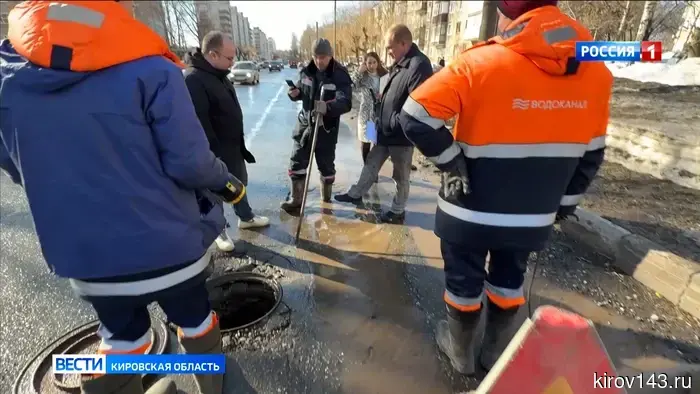 В Кирове осуществляется оценка состояния дорожного покрытия после зимнего сезона.
В Кирове специалисты из дирекции благоустройства вместе с представителями департамента городского хозяйства и подрядными организациями проверяют качество дорожного покрытия после зимнего периода. Подробности можно найти в нашем материале. Для каждого объекта составляется акт обследования, в котором фиксируются выявленные недостатки.
В Кирове осуществляется оценка состояния дорожного покрытия после зимнего сезона.
В Кирове специалисты из дирекции благоустройства вместе с представителями департамента городского хозяйства и подрядными организациями проверяют качество дорожного покрытия после зимнего периода. Подробности можно найти в нашем материале. Для каждого объекта составляется акт обследования, в котором фиксируются выявленные недостатки.
 During the special military operation, a resident of the Zuevsky district was killed.
Officials reported the death of a serviceman.
During the special military operation, a resident of the Zuevsky district was killed.
Officials reported the death of a serviceman.
 Kirov employers spoke about the sectors where they show loyalty to employees with criminal records.
Employers from Kirov participated in a survey by the job search service "SuperJob" and shared which companies are willing to hire people with unexpunged criminal records.
Kirov employers spoke about the sectors where they show loyalty to employees with criminal records.
Employers from Kirov participated in a survey by the job search service "SuperJob" and shared which companies are willing to hire people with unexpunged criminal records.
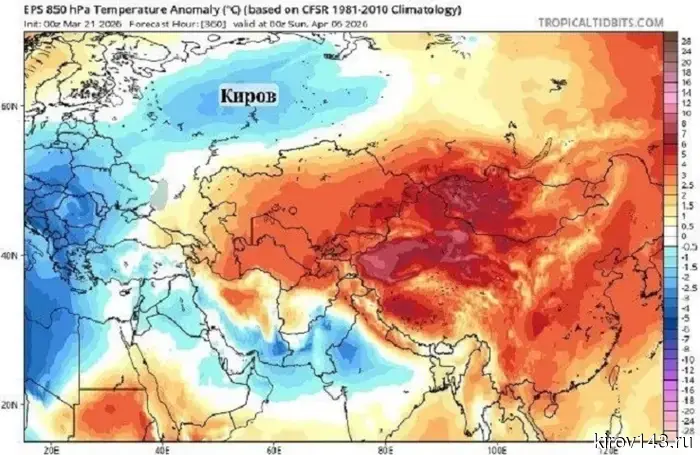 April may greet Kirov residents with cold and precipitation.
The current heat wave in the Kirov region, apparently, will not last long. According to the Telegram channel "Amateur Meteorology in Kirov," the region may find itself in a cold zone again in early April.
April may greet Kirov residents with cold and precipitation.
The current heat wave in the Kirov region, apparently, will not last long. According to the Telegram channel "Amateur Meteorology in Kirov," the region may find itself in a cold zone again in early April.
 57 pregnant students from the Kirov region received nearly 5 million rubles.
Starting from September 2025, the rules for payments for expectant mothers studying full-time in Russia have changed.
57 pregnant students from the Kirov region received nearly 5 million rubles.
Starting from September 2025, the rules for payments for expectant mothers studying full-time in Russia have changed.
 Taurus will find luck in love, while Scorpios will encounter a surprise.
Astrologers have reported how the first working day of the upcoming week will go for all zodiac signs.
Taurus will find luck in love, while Scorpios will encounter a surprise.
Astrologers have reported how the first working day of the upcoming week will go for all zodiac signs.
"Battery is running low": who is at risk of a heart attack due to sudden weather changes and why weather dependence is not a myth
Many attribute their poor well-being to "silly weather," and sometimes this is indeed justified. Doctors remind us that sharp fluctuations in temperature, atmospheric pressure, and magnetic storms are not just discomforts, but a serious blow to the body. There are groups of people for whom such whims of nature can be truly dangerous.