
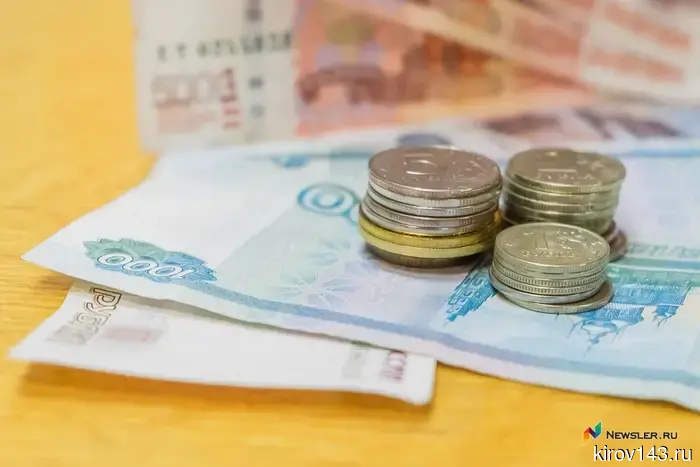
Analysts revealed what will happen to the ruble in the coming months.
Recently, some media outlets published the opinion that in the fall of 2026, the ruble may significantly weaken against the dollar and the euro. We reached out to analysts with the question of what forecast they can provide for September and the fall in general, and what factors will determine the future of the Russian currency. According to them, in the coming months, the dollar may rise to a maximum of 90-93 rubles, and the euro to 104-106 rubles.
Natalia Milchakova, leading analyst at Freedom Finance Global:
“Our forecast for the ruble exchange rate in September and the fall has not changed. We expect the dollar exchange rate in September to be 85-92 rubles, and the euro to be 98-105 rubles. For the fall of this year, our forecast for the dollar is 83-93 rubles, and for the euro, 96-106 rubles.
The current dynamics of the exchange rate aligns with our previously stated expectations. Two key events will be decisive for the trajectory of the exchange rate in the near future: on September 11, there will be a meeting of the Board of Directors of the Bank of Russia, where the issue of the key rate will be considered, and on September 16, there will be a meeting of the Federal Reserve dedicated to the direction of interest rate changes. According to our forecasts, at the September meeting, the regulator will refrain from lowering the rate for the first time since June 2025, keeping it at 14% per annum; at the same time, the Federal Reserve will also not make adjustments and will maintain rates within the current range.
Against the backdrop of these factors, additional negative pressure on the ruble may come from the parliamentary elections scheduled for September 18-20: increased attention from market participants to pre-election statements about future budget expenditures may adjust inflation expectations. The moderately tight monetary policy of the Bank of Russia will serve as a stabilizing element: it will prevent a sharp decline of the national currency, but at the same time, it will not allow the ruble to return to the corridor of 70-80 rubles per dollar.
In October, the drivers of the ruble's dynamics will remain the same — meetings of the Central Bank of Russia and the Federal Reserve, currency purchases by the Ministry of Finance. However, in November, the situation may change somewhat if the negotiation process regarding Ukraine resumes, for example, if Presidents Putin and Trump hold even short-term talks on this topic during the November APEC summit.
In the near future, short-term corrections of the ruble upwards are possible, especially in the third decade of the month against the backdrop of the tax period, but medium-term and long-term trends for the ruble's weakening, in our opinion, will not change this year.”
Alexander Potavin, analyst at Finam Group:
“In August, the ruble noticeably weakened, despite the persistently high oil prices — around $85-90 per barrel for Brent. Over just three summer months, the ruble depreciated by more than 20%, which is quite a significant decline.
The maximum dollar exchange rate this week was recorded at 87.34 rubles. This means that since the beginning of the week, the ruble has weakened by 1.16%. For six out of the last eight weeks, the ruble has lost ground against other key currencies.
In our opinion, several factors influenced the ruble's dynamics in August. Firstly, the operations of the Ministry of Finance and the Central Bank within the framework of the budget rule. In August, the Ministry of Finance increased its currency purchases in the domestic market to 5.92 billion rubles per day, which is about 22% higher than the July level. By withdrawing currency from the market in such volumes, the regulator itself actively contributed to the weakening of the ruble.
Secondly, there has been a decrease in the inflow of export earnings into the domestic market. In recent months, we have seen a gap between the received export earnings and the actual currency inflow into the domestic market.
Thirdly, in August, maritime oil shipments from Russia significantly decreased. This leads to an overall reduction in export sales volumes, and therefore, currency earnings.
Fourthly, high geopolitical tension and sanctions risks. The risks of escalation of the military conflict in Ukraine prompt the population and businesses to buy currency more actively as a protective asset.
These same factors will be relevant for determining the dynamics of the ruble's exchange rate, with the exception of the factor of the Ministry of Finance's operations. On September 3, it became known that the Ministry of Finance would reduce currency purchases in the coming month due to the expected volume of additional oil and gas revenues in September being projected at 100.7 billion rubles, while the total deviation of actually received oil and gas revenues from the baseline monthly volume in August amounted to 45 billion rubles. As a result, net currency purchases from September 7 will decrease to 1.9 billion rubles per day compared to 5.9 billion rubles per day in the previous period. This means that demand from the regulator will decrease by 67% — a positive factor for the dynamics of the ruble's exchange rate.
Factors that will positively influence the ruble's exchange rate in September include, firstly, elevated levels of oil prices. Brent quotes do not fall below $85 per barrel. Secondly, high real interest rates on rubles. Considering the key rate of the Central Bank of Russia at 14% and annual inflation around 6%, we have a real rate of about 8%. Thirdly, seasonal and domestic political factors. Usually, during the elections to the State Duma, the ruble exchange rate has demonstrated stability and even strengthening.
Taking into account all the aforementioned factors, we expect some strengthening of the Russian currency this fall. Accordingly, we expect the dollar exchange rate in the coming week to be in the range of 85-88 rubles. The Chinese yuan, during this time, will likely remain in the range of 12.6-13.0 rubles.
By the end of the year, the dollar exchange rate will likely be around 87-90 rubles. Accordingly, the euro exchange rate may be in the range of 100-104 rubles. We expect the Chinese yuan at the end of the year to be around 12.5-13.2 rubles.
Другие Новости Кирова (НЗК)
 Bastrikin demanded a report on the beating of a schoolgirl in Vyatskiye Polyany.
In the Kirov region, the Investigative Committee is conducting an investigation following reports of the beating of a minor by a group of teenagers.
Bastrikin demanded a report on the beating of a schoolgirl in Vyatskiye Polyany.
In the Kirov region, the Investigative Committee is conducting an investigation following reports of the beating of a minor by a group of teenagers.
 События в Кирове: программа на 5 и 6 сентября
МУЗЕИ: Художественный музей, ул. Владимирская, 70: Выставка Александра Волкова «Смальта уездных впечатлений»: с 29 июня по 6 сентября 2026 года. Выставка «Дыхание земли. Традиция и современность»: с 4 июля по 25 октября 2026 года. 5 сентября в 15:00 – арт-пауза в зале «Русское искусство рубежа XIX - XX вв». 6 сентября в 15:00 – итоговое мероприятие.
События в Кирове: программа на 5 и 6 сентября
МУЗЕИ: Художественный музей, ул. Владимирская, 70: Выставка Александра Волкова «Смальта уездных впечатлений»: с 29 июня по 6 сентября 2026 года. Выставка «Дыхание земли. Традиция и современность»: с 4 июля по 25 октября 2026 года. 5 сентября в 15:00 – арт-пауза в зале «Русское искусство рубежа XIX - XX вв». 6 сентября в 15:00 – итоговое мероприятие.
 In Vyatskie Polyany, the Investigative Committee began an investigation after the beating of a minor.
According to the investigation, in August one of the girls kicked another in the head several times.
In Vyatskie Polyany, the Investigative Committee began an investigation after the beating of a minor.
According to the investigation, in August one of the girls kicked another in the head several times.
 In the Kirov region, half of the fields have been harvested.
The average grain yield in the Kirov region is 27 centners per hectare.
Dredging of the Vyatka — a pre-election joke by the governor?
On August 24, Alexander Sokolov reported on regional plans to attract large-scale federal funding for the project to deepen the bottom of the Vyatka River in order to transport goods from north to south.
In the Kirov region, half of the fields have been harvested.
The average grain yield in the Kirov region is 27 centners per hectare.
Dredging of the Vyatka — a pre-election joke by the governor?
On August 24, Alexander Sokolov reported on regional plans to attract large-scale federal funding for the project to deepen the bottom of the Vyatka River in order to transport goods from north to south.
 Lions will conduct experiments, while Sagittarians will achieve victory.
Astrologers revealed what events all zodiac signs can expect on the first weekend of the current week.
Lions will conduct experiments, while Sagittarians will achieve victory.
Astrologers revealed what events all zodiac signs can expect on the first weekend of the current week.
Analysts revealed what will happen to the ruble in the coming months.
Experts shared their opinions on what awaits domestic and foreign currencies.