
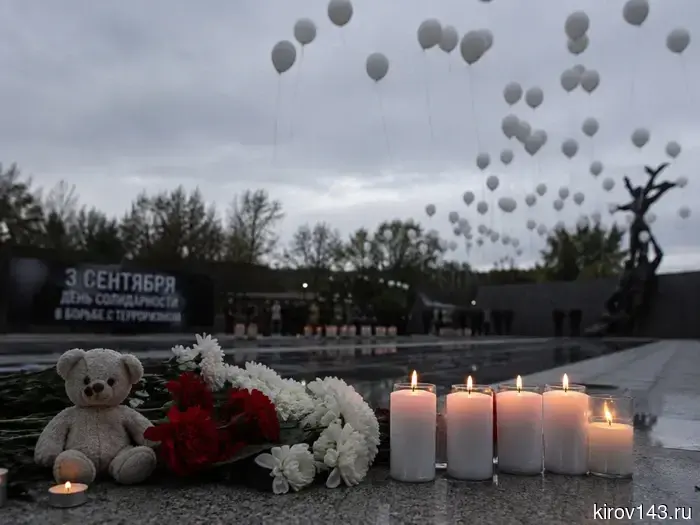
22 years after Beslan: why we have no right to forget September 3
September 3. For most, this day is an ordinary Thursday, a workday, a routine. But for those who remember, it is a day when something inside tightens. A day of solidarity in the fight against terrorism. A day that is not celebrated but endured. And every year it resonates with a pain that has not subsided for 22 years. Exactly 22 years ago, on September 3, 2004, at 1:05 PM, explosions rocked the gym of School No. 1 in the city of Beslan. The assault began. And a few hours later, the country learned the terrible number: 334 dead. Of these, 186 were children. These were not just numbers in reports. They were boys and girls with bows and flowers who came for the ceremony but found themselves in a booby-trapped building without water and food for three days. They were held by terrorists. They wrote notes, begged for help, died of thirst and explosions. And when it was all over, it became clear: life as it was before would never return. Beslan became a point of no return. After it, Russia created the National Anti-Terrorism Committee, revised laws, and increased security. But most importantly, it changed us. It made us understand: terrorism is not somewhere out there, in distant hot spots. It can burst into life, dividing it into before and after. And behind each such crime are people who made their choice. A conscious choice. Not victims of circumstances, not accidentally lost. Those who consciously committed a crime against their country. Those who decided they had the right to dispose of other people's lives. Those for whom 334 children in Beslan are just statistics, and 151 people in "Krokus" are an unfortunate inconvenience. The chronicle after Beslan: was it quiet? Unfortunately, Beslan was not the last tragedy. Next came "Nord-Ost" at Dubrovka (over 130 dead), explosions in residential buildings in Moscow, Buynaksk, and Volgodonsk (over 300 dead), terrorist attacks in Volgograd, an explosion in the St. Petersburg metro. And just recently — March 2024, "Krokus City Hall" in Krasnogorsk. 151 dead, six of them children. It would seem we have gotten used to it. Metal detectors at entrances, warning signs, anti-terrorist drills. We know the algorithm of actions in case of a threat. But it is impossible to get used to the pain. Every time news comes in about a new terrorist attack, a chill runs through your chest. And you think: "Again." And then you see the faces of the dead — and you understand that this is not "again." This is someone's life. Someone's children, parents, friends. And this was done by specific people who are deliberately working against our country. Who feel no pity for anyone. A threat in our pockets: how recruitment became a new reality But there is another threat. It is not in the mountains or at the border, but in our pockets. In smartphones, in messengers, in social networks. Terrorism has gone online. And the main target of recruiters is the youth. Teenagers who are searching for themselves, wanting to be heroes, cannot always distinguish truth from fake. They are manipulated. They are used as a tool. As expendable material in someone else's game against the country. According to the Security Council of the Russian Federation, in the first half of 2026 alone, the number of teenagers committing terrorist-related crimes increased by 2.2 times — from 88 to 196 cases. The agency links this trend to active recruitment via the internet by Ukrainian nationalists. And behind these numbers are someone's children, who were processed online using social engineering and psychological pressure methods. They were convinced that they were performing a heroic act. But in reality, they are just carrying out someone else's will. The will of those who wish harm. The FSB has repeatedly warned about this. Ukrainian nationalists are actively recruiting youth online, playing on emotions and promising significance. Their goal is not "freedom" or "justice." Their goal is to inflict maximum damage on Russia. And the more teenagers they involve, the more chaos they create. "The Line": why people become traitors In May 2026, we, Newsler.ru, released a documentary film "The Line" (16+). It is precisely about this. About how an ordinary person becomes a traitor. How he crosses that very line, after which there is no turning back. The central character is Ali Litvin. He is serving 9 years in Colony No. 1 in the Kirov region for treason and preparation for a terrorist act. Like hundreds of others, he once considered himself an ordinary guy. And then — he transported explosives, collaborated with Ukrainian special services, participated in the activities of banned organizations. He made this choice himself. Consciously. We met with him, talked. And his story is not a justification, but a warning. In the film, experts — security services specialist Sergey Karnaukhov and psychologist Alexey Ermolov — explain how recruiters operate, why people fall for their tricks, and how not to let oneself be used against one's own country. It is a heavy film. But it needs to be watched. Because it will not let you sleep peacefully, but will teach you to see threats where you previously did not notice them. What is happening today And today — across the country, memorial events are taking place. In Beslan — the traditional Vigil of Memory. At 1:05 PM, bells will toll, 334 white balloons will soar into the sky, and thousands of people will march in a mourning procession to the "City of Angels." In Moscow — laying flowers at the memorial in Dubrovka, a requiem in the Church of the Nativity of the Most Holy Theotokos. And a minute of silence across the country. It lasts only a minute. But in this minute — pain and memory. And the realization that we have no right to close our eyes to the threat. No matter how invisible it may seem. Instead of an epilogue 22 years have passed. But the pain has not. Unintentionally, questions arise in my mind: "How many more years must pass before we stop being afraid? Before our children stop being targets? Before no one ever decides that they can dispose of someone else's life?" There is no answer. As long as there are those who wish harm to our country, we must remember. We must be vigilant and protect our loved ones. And not let anyone cross that very line — the line beyond which betrayal begins.
Другие Новости Кирова (НЗК)
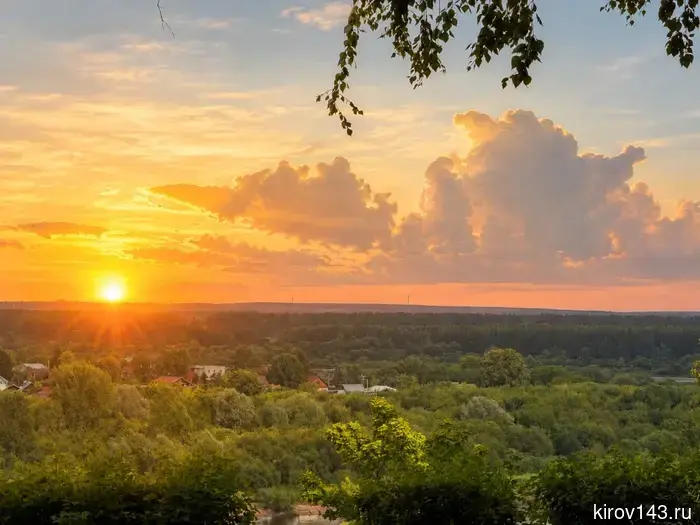 The Kirov region will become the "Capital of Dawns": a large photo project is starting in the region.
Newsler.ru is launching a regional photo contest "Capital of Dawns." Participants are invited to showcase the Kirov region as it can only be seen early in the morning. The best photos will be included in the final exhibition, and some works will be sent to Nizhny Novgorod — to visit the "Capital of Sunsets."
В Кирове дома, которые не имеют горячей воды, будут подключены до 10 сентября.
В Кирове дома без горячей воды будут подключены до 10 сентября.
The Kirov region will become the "Capital of Dawns": a large photo project is starting in the region.
Newsler.ru is launching a regional photo contest "Capital of Dawns." Participants are invited to showcase the Kirov region as it can only be seen early in the morning. The best photos will be included in the final exhibition, and some works will be sent to Nizhny Novgorod — to visit the "Capital of Sunsets."
В Кирове дома, которые не имеют горячей воды, будут подключены до 10 сентября.
В Кирове дома без горячей воды будут подключены до 10 сентября.
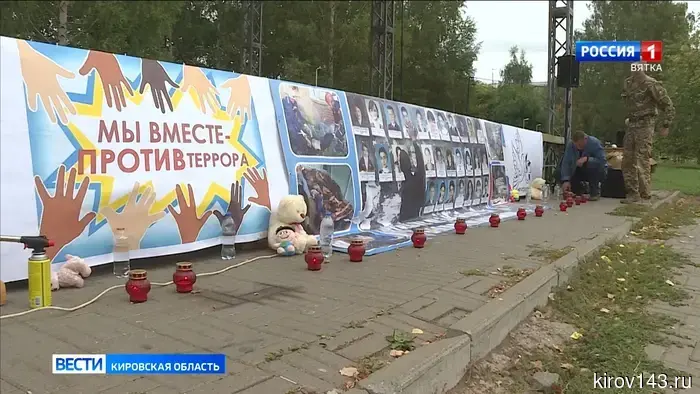 3 сентября — День единства в борьбе с терроризмом.
Сегодня отмечается День солидарности в борьбе с терроризмом. Эта дата была установлена в память о трагических событиях, произошедших с 1 по 3 сентября 2004 года в Беслане. Террористы захватили школу, взяв в заложники 1100 человек. Более 300 из них, в основном женщины и дети, погибли. В Кировской области проводятся мероприятия
Streetlights will be installed at the playground in Sidorovka.
The work should be finished in a few days.
3 сентября — День единства в борьбе с терроризмом.
Сегодня отмечается День солидарности в борьбе с терроризмом. Эта дата была установлена в память о трагических событиях, произошедших с 1 по 3 сентября 2004 года в Беслане. Террористы захватили школу, взяв в заложники 1100 человек. Более 300 из них, в основном женщины и дети, погибли. В Кировской области проводятся мероприятия
Streetlights will be installed at the playground in Sidorovka.
The work should be finished in a few days.
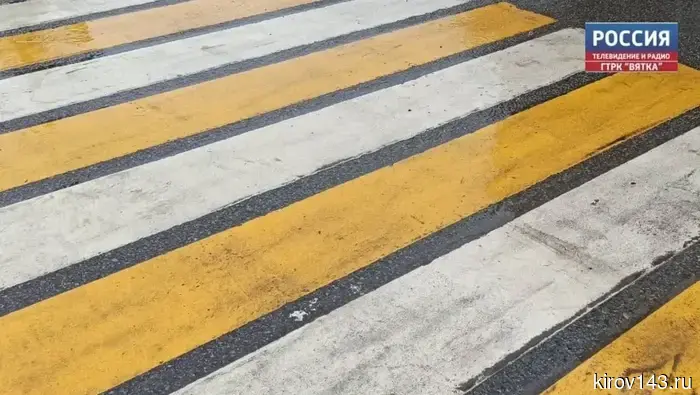 Подросток не слез с велосипеда: в Кирове на пешеходном переходе пострадал четырехлетний ребенок.
По информации региональной полиции, 31 августа в Кирове возле дома №83 на улице Воровского пострадал маленький ребенок. На пешеходном переходе 15-летний подросток, не сойдя с велосипеда, наехал на 4-летнего мальчика, который переходил дорогу с отцом на зеленый сигнал светофора. После проведения проверки
Подросток не слез с велосипеда: в Кирове на пешеходном переходе пострадал четырехлетний ребенок.
По информации региональной полиции, 31 августа в Кирове возле дома №83 на улице Воровского пострадал маленький ребенок. На пешеходном переходе 15-летний подросток, не сойдя с велосипеда, наехал на 4-летнего мальчика, который переходил дорогу с отцом на зеленый сигнал светофора. После проведения проверки
 Autumn exchange rate of the ruble: experts revealed what will become more expensive and what will become cheaper.
In the fall, the ruble may weaken, and along with it, prices for many goods may rise. However, experts do not expect a sharp jump in the currency. Let's analyze what the exchange rate will be in the coming months and how this will affect the wallets of Kirov residents.
Autumn exchange rate of the ruble: experts revealed what will become more expensive and what will become cheaper.
In the fall, the ruble may weaken, and along with it, prices for many goods may rise. However, experts do not expect a sharp jump in the currency. Let's analyze what the exchange rate will be in the coming months and how this will affect the wallets of Kirov residents.
22 years after Beslan: why we have no right to forget September 3
Exactly 22 years ago, terrorists seized a school in Beslan. 334 dead, of which 186 were children. Today in Russia is the Day of Solidarity in the Fight Against Terrorism. We remember the tragedy that divided the country into "before" and "after," and we try to understand why, years later, the threat has not disappeared but simply moved into our smartphones.