

Heavy rains and gusty winds will hit the Kirov region.
The Main Directorate of the Ministry of Emergency Situations of Russia for the Kirov Region informs the population about the impending complex of adverse meteorological phenomena. On July 10 and 11, heavy rains, thunderstorm activity, and wind intensification with gusts of 16 to 21 m/s are expected in some areas of the region. In this regard, the agency has prepared detailed safety instructions for residents.
Actions during a thunderstorm. If a person finds themselves in an open area, it is prohibited to hide under tall and especially solitary trees. In the absence of nearby shelter, one should lie on the ground or take cover in a dry pit or trench. In forested areas, it is safer to stay among low-growing vegetation. During a thunderstorm, one should not enter the water, swim in bodies of water, or move quickly on foot or by bicycle. If caught in bad weather on a high ground, one should descend. Those in a boat should row to shore. Motorists caught in a thunderstorm while traveling are advised to stop, close all windows tightly, and remain inside the vehicle.
The text of the memo separately outlines the algorithm for providing first aid to someone struck by lightning. Clothing should be removed from the person, cold water should be poured over their head, and if possible, the body should be wrapped in a wet cold blanket. If the victim does not regain consciousness, artificial respiration should be started immediately, and medical assistance should be called as quickly as possible.
Behavior during heavy rain. Upon receiving information about upcoming heavy precipitation, residents are advised to refrain from using personal vehicles and, if possible, stay at work or home. To monitor the situation, it is recommended to turn on the radio or wired broadcasting means.
Drivers are required to strictly adhere to traffic rules, avoid sharp lane changes and braking, increase distance, and not exceed the allowable speed. Pedestrians must ensure safety before crossing the roadway. When leaving a residence, it is important to close windows and disconnect electrical appliances.
If caught outside in heavy rain, one should not descend into underground passages, basements, or other sunken spaces. Shelter should be sought in buildings that are above the likely flood zone. In the event of flooding in the area where a person is located, they should leave and move to a nearby elevated area. If leaving the building is impossible, one should move to the upper floors, shut off gas and electricity, and seal windows tightly.
Drivers caught in heavy rain are prohibited from attempting to cross flooded sections of the road. The vehicle should be smoothly moved to the right lane or shoulder, stopped without sudden braking, hazard lights should be turned on, and the bad weather should be waited out. If the water level rises rapidly, the car should be abandoned, and one should head to higher ground or the nearest building.
Precautions during strong winds. Before windy weather arrives, it is recommended to remove items from balconies and yards that could be displaced by gusts. Personal vehicles are better parked in a garage, and in its absence, positioned away from trees and unreliable structures.
Rescuers urge people to avoid leaving buildings if possible. When going outside, one should steer clear of advertising boards, dilapidated structures, and houses with poorly secured roofs. Children should not be left unsupervised by adults. Taking shelter from the wind near building walls, at public transport stops, near advertising structures, trees, and unfinished buildings is prohibited. Downed power lines and being under power lines pose a deadly danger.
If caught in a storm while traveling or in an open area, the best solution is to take cover in a pit or ravine and press as closely to the ground as possible. Outside populated areas, drivers are advised to leave the car and find shelter in a roadside ditch or nearby hollow. Bridges, overpasses, pipelines, power lines, and potentially hazardous industrial sites should also be avoided. In homes with gas appliances, it is necessary to check the draft.
What to do during hail. When hail occurs, it is recommended to stay indoors, remain as far away from windows as possible, and refrain from using electrical appliances, as hail is usually accompanied by thunderstorms. Outside, one should find shelter as quickly as possible; if this is not possible, protect the head from hail impacts with hands, clothing, or a bag. Hiding under trees is dangerous: there is a risk of being struck by lightning, as well as falling large branches broken by wind and hail.
Motorists are instructed to stop moving during hail. Inside the car, one should stay away from the windows—turning their back to them, facing the center of the cabin, and covering their eyes with hands or clothing. If small children are in the cabin, they should be shielded with one's body and their eyes should also be covered. If there is enough space, it is better to lie on the floor. As noted in the memo, hail typically lasts about 6 minutes and rarely lasts longer than 15 minutes.
In case of any threat or incident, emergency services can be reached by calling the single number "112". Calls are free and available 24/7 from landlines and mobile phones.
Другие Новости Кирова (НЗК)
 Жителям Кирова напомнили о правилах транспортировки животных.
На территории Кировской области действуют правила транспортировки домашних животных в общественном транспорте, сообщили в Управлении ветеринарии региона. К ключевым требованиям относятся: во время поездки животное должно находиться на коротком поводке и в наморднике. Небольшие животные (кошки, грызуны, птицы)
Жителям Кирова напомнили о правилах транспортировки животных.
На территории Кировской области действуют правила транспортировки домашних животных в общественном транспорте, сообщили в Управлении ветеринарии региона. К ключевым требованиям относятся: во время поездки животное должно находиться на коротком поводке и в наморднике. Небольшие животные (кошки, грызуны, птицы)
 В Унинском районе 32-летний пассажир автомобиля пострадал в результате вождения в нетрезвом состоянии водителя.
Авария случилась 9 июля 2026 года в Унинском районе на 115 километре автодороги «Плотники – Вожгалы – Богородское - Уни», сообщили в региональной Госавтоинспекции. Согласно предварительной информации, 27-летний водитель машины «Митсубиши Лансер», находясь под воздействием алкоголя, выехал с проезжей части.
В Унинском районе 32-летний пассажир автомобиля пострадал в результате вождения в нетрезвом состоянии водителя.
Авария случилась 9 июля 2026 года в Унинском районе на 115 километре автодороги «Плотники – Вожгалы – Богородское - Уни», сообщили в региональной Госавтоинспекции. Согласно предварительной информации, 27-летний водитель машины «Митсубиши Лансер», находясь под воздействием алкоголя, выехал с проезжей части.
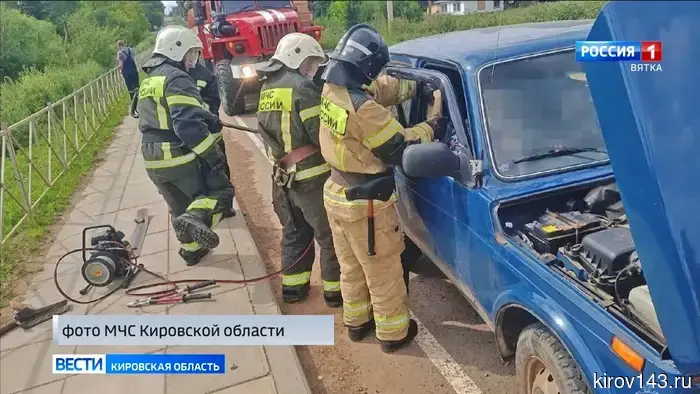 В поселке Богородское спасатели оказали поддержку пожилой паре, оказавшейся в аварии.
Спасатели оказали помощь пожилой паре. Вчера днем в поселке Богородское на улице Коммуны произошло столкновение автомобилей «Нива» и «МАЗ». В результате сильного удара двери внедорожника застряли, и находившиеся внутри супруги-пенсионеры оказались заблокированными. На место происшествия прибыли сотрудники 27-й станции.
В поселке Богородское спасатели оказали поддержку пожилой паре, оказавшейся в аварии.
Спасатели оказали помощь пожилой паре. Вчера днем в поселке Богородское на улице Коммуны произошло столкновение автомобилей «Нива» и «МАЗ». В результате сильного удара двери внедорожника застряли, и находившиеся внутри супруги-пенсионеры оказались заблокированными. На место происшествия прибыли сотрудники 27-й станции.
 В Унинском районе 32-летний пассажир авто пострадал из-за вождения в нетрезвом состоянии водителя.
Авария случилась 9 июля 2026 года в Унинском районе на 115 км трассы «Плотники – Вожгалы – Богородское - Уни», сообщили в региональной Госавтоинспекции. По предварительным данным, 27-летний водитель автомобиля «Митсубиши Лансер», будучи в состоянии опьянения, съехал с дорожного покрытия.
В Унинском районе 32-летний пассажир авто пострадал из-за вождения в нетрезвом состоянии водителя.
Авария случилась 9 июля 2026 года в Унинском районе на 115 км трассы «Плотники – Вожгалы – Богородское - Уни», сообщили в региональной Госавтоинспекции. По предварительным данным, 27-летний водитель автомобиля «Митсубиши Лансер», будучи в состоянии опьянения, съехал с дорожного покрытия.
 The Kirov region will be hit by heavy rains and gusty winds.
In the next two days, July 10 and 11, the region is expected to experience worsening weather conditions. According to the Ministry of Emergency Situations, intense rains will occur in some areas, thunderstorms will rumble, and wind gusts may reach 21 meters per second. Rescuers have published recommendations on how to act in various situations — from thunderstorms to hail.
The Kirov region will be hit by heavy rains and gusty winds.
In the next two days, July 10 and 11, the region is expected to experience worsening weather conditions. According to the Ministry of Emergency Situations, intense rains will occur in some areas, thunderstorms will rumble, and wind gusts may reach 21 meters per second. Rescuers have published recommendations on how to act in various situations — from thunderstorms to hail.
 Судебные приставы Кировской области передали пять изъятых автомобилей в зону СВО.
Управление службы судебных приставов передало на нужды СВО пять конфискованных автомобилей. Представители ведомства сообщили подробности. Эфир состоится 10.07.2026.
Судебные приставы Кировской области передали пять изъятых автомобилей в зону СВО.
Управление службы судебных приставов передало на нужды СВО пять конфискованных автомобилей. Представители ведомства сообщили подробности. Эфир состоится 10.07.2026.
Heavy rains and gusty winds will hit the Kirov region.
In the next two days, July 10 and 11, the region is expected to experience worsening weather conditions. According to the Ministry of Emergency Situations, intense rains will occur in some areas, thunderstorms will rumble, and wind gusts may reach 21 meters per second. Rescuers have published recommendations on how to act in various situations — from thunderstorms to hail.