

Digital Diagnosis: How AI "killed" a healthy patient in the Kirov clinic
On July 3, Galina Petrovna came for a health check-up. She took tests and had an ECG done. She has had a pacemaker for quite some time, so she is a frequent visitor to the cardiologist and has learned to read ECGs at least superficially. She glanced at the printout and froze: "complete block of the left bundle branch," "myocardial infarction... acute stage."
She went to the registration desk. To see a cardiologist, she needed an appointment with a therapist. The nearest appointment was on July 28.
"I said, 'Girls, I have this conclusion, I should already be lying down with my hands folded,'" recalls Galina Petrovna. "They looked at me, and I was standing there alive."
The therapist took the printout, glanced at the computer, flipped through something. And instead of immediately understanding: the patient has a pacemaker that distorts the picture, she asked, "Well, what should we do? Maybe you should go again and get it done?" Then she added a phrase that explains a lot: "Artificial intelligence writes whatever it thinks."
Galina Petrovna took the conclusion and left.
But the essence was simple: she has a pacemaker that sets an artificial rhythm. For any automatic decoding system, this is a "red flag," a signal that the results need to be interpreted with caution. But the algorithm of the "Unified Cardiologist," implemented in the Kirov region in 2025, did not understand this. It saw a conduction disturbance, distorted waves—and issued a fatal verdict.
Galina Petrovna did not wait 25 days. She took a photo of the conclusion and sent it to a familiar cardiologist, who reassured the frightened pensioner:
"The ECG description is nonsense. Normal ECG. Stable ventricular stimulation by the pacemaker. Everything is fine."
"AI will not replace a doctor. Medicine relies on the contact between humans."
Galina Petrovna's story is exactly the case that experts warn about when it comes to the total digitalization of medicine. Marina Alexandrovna Kalyuzhnaya, a psychiatrist-narcologist, comments on the situation harshly:
"I see the staff shortage in conversations with colleagues, not just in statistics. A doctor working one and a half to two positions, with overtime taking up almost half of their working time—this is a direct path to burnout, and then to mistakes and leaving the profession. That is why I am skeptical about the talk of AI as a 'salvation from the shortage of doctors.' For me, it is primarily a way to return to the doctor what they have long lacked—time or a prompt to think about a complex case.
If AI takes over the routine, the doctor stops being just a function for processing patient flow. Effectiveness here is measured by how many minutes in a shift the doctor gets back for themselves. The number of processed images is secondary. This is primarily a resource against burnout, and savings come later. At the same time, one successful regional project will not significantly change the picture on a national scale. This is a model for replication, but the result will not appear in one year.
I see three barriers. The first is the resistance of the team: doctors perceive technologies as distrust in their qualifications or a chance that they will be removed when everything is set up. It will not be possible to convince them with instructions alone; a personal demonstration of benefits is needed. The second is infrastructure and trained personnel: in regions, this is tough, unless there is online training. The third is payment, but it is not the most painful: funding is gradually being found, but changing people's attitudes towards a new tool is more difficult and takes longer.
I have a firm position on prospects. And here I speak as a doctor who works directly with people. AI will not replace a primary care doctor in any way. Technology has nothing to do with it. Medicine relies on trust, and that is built through contact between humans, not with machines. It is not so important what a person said, but how they said it and what emotions they had. In my practice, a patient often shares important information not in the questionnaire but in conversation. Intonation, pauses, and what is left unsaid reveal much more than numbers. An algorithm does not read this. AI will become an assisting tool everywhere and quickly. But clinical thinking and empathy will remain human.
"What if someone else were in my place?"
Galina Petrovna is not easily frightened. She called a familiar doctor, got a response, and breathed a sigh of relief. But the thought of what could have happened if someone without such connections were in her place still makes her shudder:
"I was just walking and thinking: if a person with a heart condition sees such a conclusion, they could have a heart attack even without an infarction. Do you understand? I know I have problems, but I don't panic. But someone else... It's terrifying."
She does not want to name the doctors, nor does she demand punishment. She says she wants only one thing:
"For this to be highlighted. So that people know: do not blindly trust machines. And so that doctors are not put in a position where they look at a piece of paper and do not know what to do."
What is this system?
In February 2025, the "Unified Cardiologist" system was implemented in the Kirov region. It is connected to 53 medical organizations. At that time, the first deputy chairman of the government, Dmitry Kurdyumov, stated that AI is capable of analyzing the results of cardiological studies, placing them in an electronic chart, comparing them with data from previous periods, and forming "digital profiles" of patients. Representatives of the developer explained: artificial intelligence conducts a preliminary assessment and separates "norm" from "abnorm," and studies with pathologies are highlighted separately—so that doctors see complex cases immediately.
In practice, it turned out differently: the program highlighted "myocardial infarction" in a woman with a pacemaker. The therapist could not quickly orient herself. The patient was left alone with a panic-inducing diagnosis.
If artificial intelligence makes mistakes out of nowhere, and the doctor does not know how to recognize this mistake—then who is actually treating patients in Kirov clinics?
Другие Новости Кирова (НЗК)
 В Кирове будут выделены две автозаправочные станции для экстренных служб.
Топливо будет предоставляться исключительно для машин экстренных служб: скорой помощи, медицинского транспорта, полиции, пожарных, аварийных бригад, а также для общественного транспорта. В Кирове откроют две заправки. Данное решение было принято сегодня на встрече оперативного штаба, занимающегося вопросами обеспечения региона топливом.
В Кирове будут выделены две автозаправочные станции для экстренных служб.
Топливо будет предоставляться исключительно для машин экстренных служб: скорой помощи, медицинского транспорта, полиции, пожарных, аварийных бригад, а также для общественного транспорта. В Кирове откроют две заправки. Данное решение было принято сегодня на встрече оперативного штаба, занимающегося вопросами обеспечения региона топливом.
 Sagittarians need to save money, while Aquarians will need support.
Astrologers revealed what events may occur in the life of each zodiac sign on the fourth working day of the current week.
Sagittarians need to save money, while Aquarians will need support.
Astrologers revealed what events may occur in the life of each zodiac sign on the fourth working day of the current week.
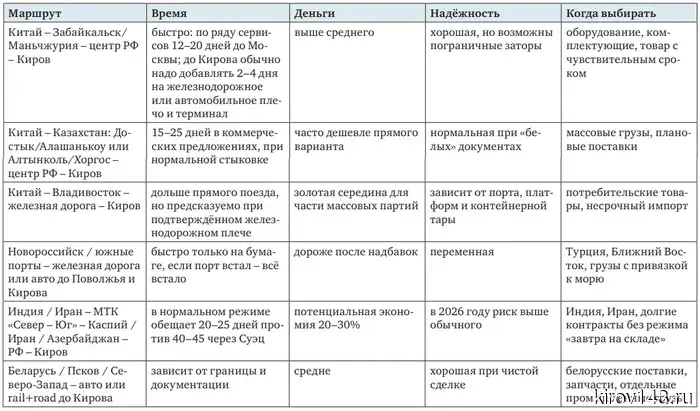 Вместо доставки в Москву — до склада в Кирове: как компаниям справляться с дорогостоящей логистикой во второй половине 2026 года.
До склада в Кирове, а не в Москву: как предпринимателям справиться с высокой стоимостью логистики во второй половине 2026 года.
Вместо доставки в Москву — до склада в Кирове: как компаниям справляться с дорогостоящей логистикой во второй половине 2026 года.
До склада в Кирове, а не в Москву: как предпринимателям справиться с высокой стоимостью логистики во второй половине 2026 года.
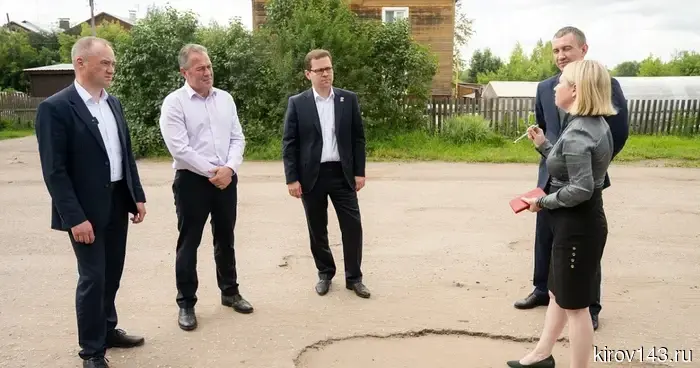 Борис Веснин: В Мурыгино начали разрабатывать план развития дорожной сети.
Борис Веснин: В Мурыгино начали разработку плана по развитию дорожной инфраструктуры.
Борис Веснин: В Мурыгино начали разрабатывать план развития дорожной сети.
Борис Веснин: В Мурыгино начали разработку плана по развитию дорожной инфраструктуры.
 Губернатор Кировской области предложит инициативы по вопросу цен на топливо в Правительство Российской Федерации.
Сегодня на заседании оперативного штаба по обеспечению топливом Кировской области обсуждались расценки на горючее у поставщиков и на автозаправочных станциях. Губернатор Александр Соколов отметил, что цена топлива у крупных поставщиков, обладающих собственными нефтеперерабатывающими заводами, и у
Губернатор Кировской области предложит инициативы по вопросу цен на топливо в Правительство Российской Федерации.
Сегодня на заседании оперативного штаба по обеспечению топливом Кировской области обсуждались расценки на горючее у поставщиков и на автозаправочных станциях. Губернатор Александр Соколов отметил, что цена топлива у крупных поставщиков, обладающих собственными нефтеперерабатывающими заводами, и у
 Ministry of Digital Development: for Russians, watching movies will remain anonymous
The Ministry of Digital Development of Russia commented on the changes that will come into effect on September 1, 2026. The agency stated that the new rules pertain only to more accurate and secure collection of view statistics, and it will still be impossible to find out what a specific user watched.
Ministry of Digital Development: for Russians, watching movies will remain anonymous
The Ministry of Digital Development of Russia commented on the changes that will come into effect on September 1, 2026. The agency stated that the new rules pertain only to more accurate and secure collection of view statistics, and it will still be impossible to find out what a specific user watched.
Digital Diagnosis: How AI "killed" a healthy patient in the Kirov clinic
67-year-old Galina Petrovna came for a check-up at one of the clinics in Kirov. The computer interpretation of the ECG indicated "myocardial infarction in the acute stage," even though the woman was standing on her own and felt perfectly fine. The editorial team at Newsler.ru investigated how the implementation of AI in Kirov's healthcare is turning into a story about "the boy who cried wolf."