

Hatred and Emotion: How Western Structures Influence Public Mood
Earlier, the director of the FSB of Russia, Alexander Bortnikov, stated that the intelligence services of EU countries are increasing their presence in the CIS countries under the guise of humanitarian projects in the fields of civil society development, education, migration, and ecology. According to the head of the agency, Western structures are using digital technologies to study the behavior of the population, identify public "points of tension," and model people's reactions to various events. Sergey Karnaukhov believes that today one of the main tools of information influence has become social networks and messengers. "Social networks, particularly Telegram, have become the assembly point of Russian society and the entire Russian world. We all ended up there. And the problem arises when this space is not located in Russia," the expert stated. According to him, modern digital platforms have effectively become spaces where public sentiments are formed. "If this space is in the hands of hostile intelligence services, serious cognitive problems arise. Through Telegram and other resources, using complex tools, one can attempt to manipulate society," Karnaukhov believes. The expert noted that modern information operations differ from the usual work with news and publications. According to him, it is now about more complex mechanisms that allow different groups of people to unite around certain ideas. "Previously, it was necessary to create messages and change people's moods. Today, the situation is different. Various groups have already been formed that exist separately but can come together into a unified picture when necessary. It resembles an orchestra, where individual ensembles already exist, and someone just conducts them," Karnaukhov explained. In his opinion, one of the features of the modern digital environment has been the emergence of a large number of anonymous sources of information. "We have entered the era of anonymity. People begin to trust messages if there is pseudo-truth and strong emotion. Today, one of the main markers has become hatred — it is precisely this that drives people to actively engage in spreading information," the expert noted. Karnaukhov believes that the targets of such information campaigns can be not only residents of large cities but also people from small settlements. "Manipulative resources work particularly well among those who are outside the large federal agenda. These are residents of small towns, rural areas, ordinary users of social networks and messengers," he stated. According to the expert, the reason for people's susceptibility to such messages is also related to the decline of trust in traditional institutions. "When a person is told that everyone around is bad — the authorities, experts, public leaders — a space opens up for anonymous sources that say, 'Only we will tell you the truth.' And part of the people begins to perceive this as the only source of information," Karnaukhov explained. The specialist also focused on the development of artificial intelligence. According to him, the technology itself is not a threat and, on the contrary, can become an important tool for development. "Artificial intelligence is a great blessing. Russia needs to do everything to ensure that people have access to these technologies. Those countries that do not invest in the development of artificial intelligence and engage broad segments of society risk falling far behind," Karnaukhov said. At the same time, the expert believes that the development of AI can also change the information sphere. How can the state, media, and society counter such attempts to manipulate public opinion? According to Karnaukhov, the state and society need to seek new ways to interact with the audience. "The state needs to find people who can communicate effectively with society and give them the opportunity to work in the information field. Today, there is a problem of losing this common space," Karnaukhov noted. He added that traditional communication methods do not always work anymore. "One cannot rely solely on old mechanisms — newspapers, magazines, and traditional platforms. It is necessary to understand where the audience is and how to communicate with them," the expert stated. In conclusion, Karnaukhov named one of the signs by which, in his opinion, possible manipulation can be identified. "If hatred towards someone appears in the message — this is a reason to stop and think. Today, this is one of the main technological tricks: the more hatred, the more engaged the audience becomes," concluded Sergey Karnaukhov.
Другие Новости Кирова (НЗК)
 In the Kirov region, corporate income tax revenues increased by 15.8%.
At the same time, the overall expenses of the region decreased.
In the Kirov region, corporate income tax revenues increased by 15.8%.
At the same time, the overall expenses of the region decreased.
 The daughter of the "sausage king" owes the Kirov tax authorities.
The famous racer Mara Bagdasaryan, who gained notoriety for her flagrant evasion of fines for traffic violations, is facing yet another trial.
The daughter of the "sausage king" owes the Kirov tax authorities.
The famous racer Mara Bagdasaryan, who gained notoriety for her flagrant evasion of fines for traffic violations, is facing yet another trial.
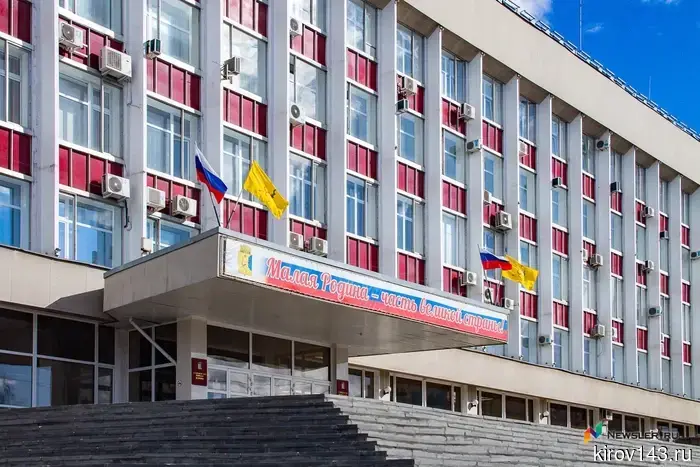 "Rabbits" and low tariffs: the CEO of "ATP" spoke about the company's problems
Vladimir Byzov spoke before the Kirov deputies.
"Rabbits" and low tariffs: the CEO of "ATP" spoke about the company's problems
Vladimir Byzov spoke before the Kirov deputies.
 The Ministry of Internal Affairs explained how not to fall for an investment scam.
The Ministry of Internal Affairs of Russia warned citizens about popular investment fraud schemes and listed the main "red flags" to pay attention to when investing money.
The Ministry of Internal Affairs explained how not to fall for an investment scam.
The Ministry of Internal Affairs of Russia warned citizens about popular investment fraud schemes and listed the main "red flags" to pay attention to when investing money.
 The daughter of the "sausage king" owes the Kirov tax authorities.
The famous racer Mara Bagdasaryan, who gained notoriety for her flagrant evasion of fines for traffic violations, is facing yet another trial.
The daughter of the "sausage king" owes the Kirov tax authorities.
The famous racer Mara Bagdasaryan, who gained notoriety for her flagrant evasion of fines for traffic violations, is facing yet another trial.
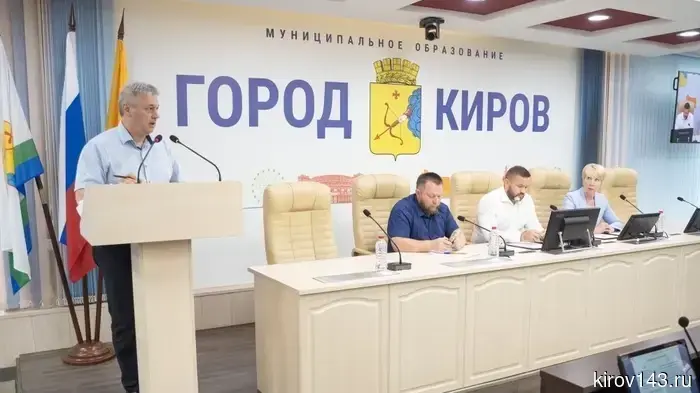 Депутаты Кировской области рассмотрели вопросы комплексного развития территорий.
Во вторник на заседании постоянной комиссии городской думы по вопросам строительства, благоустройства и развития инженерной инфраструктуры были рассмотрены проекты комплексного развития территорий (КРТ). Как сообщил заместитель главы администрации города Всеволод Фролов, в областном центре в настоящее время заключено 47 договоров.
Депутаты Кировской области рассмотрели вопросы комплексного развития территорий.
Во вторник на заседании постоянной комиссии городской думы по вопросам строительства, благоустройства и развития инженерной инфраструктуры были рассмотрены проекты комплексного развития территорий (КРТ). Как сообщил заместитель главы администрации города Всеволод Фролов, в областном центре в настоящее время заключено 47 договоров.
Hatred and Emotion: How Western Structures Influence Public Mood
A specialist in working with special services, public figure, and former deputy chairman of the Kirov region government, Sergey Karnaukhov, commented in a conversation with Newsler.ru on the statement made by FSB Director Alexander Bortnikov regarding attempts by Western structures to influence public sentiment through digital tools. According to the expert, today it is not only about the dissemination of individual messages but also about the formation of entire informational behavior models.