
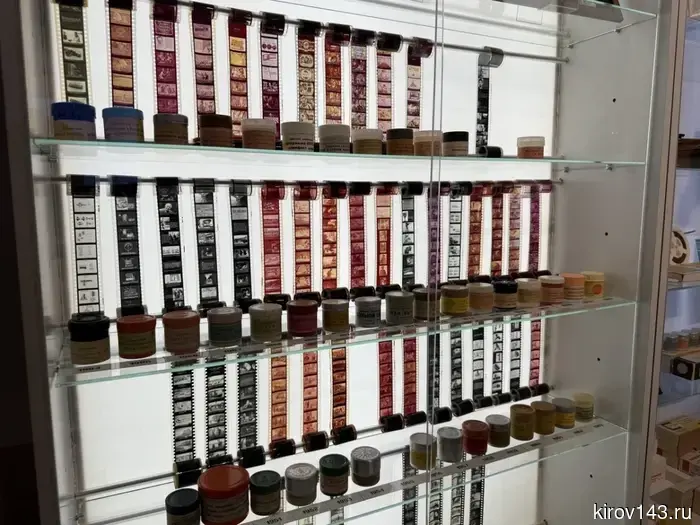
"The Magic Lantern" will show stories to the residents of Kirov.
Glass, kerosene, and hand painting
In the first display case is an English "magic lantern" from the 1870s. The body is made of brass and wood, with a kerosene burner inside. Power was measured in candles back then — this one has 80 candles. The guide demonstrates the device but does not light it — it is valued as a rare specimen in perfect condition.
Next to it are glass slides with hand-painted illustrations from "Robinson Crusoe." Each one is hand-painted and inserted into a wooden frame. They are about 200 years old. "Not a single glass has cracked, and not a single frame has dried out," comments Krivoshein. "A complete set in a two-hundred-year-old box."
Further along are Soviet projectors from the 1930s to the 1960s. The earliest is the "Aloscope" from 1930, with a stamped body. It operated on electricity and was charged with celluloid film.
This is where the era of mass home slide films began. How the "Diafilm" studio produced 40 frames in three months
Krivoshein shows a stand with the logos of the "Diafilm" studio — by year, from 1930 to the end of the 1980s. Initially, the factory only produced technical films: how to repair a tractor, how to plant wheat. In 1936, they made the first children's slide film — "Baggage" by Marshak.
During the war, one of the warehouses was destroyed by a bomb. Almost all copies from 1940 to 1941 were burned. What survived is a rarity. After the war, the studio was evacuated to Moscow on Luzhnetskaya Embankment, and in 1950 it was demolished — a stadium was started to be built on the site. The studio moved to a building of a Lutheran church on Starosadsky Lane. "The chief editor sat at the very top of the bell tower," Krivoshein recounts. "The artists climbed the spiral staircase, opened the hatch — and there they accepted the works."
A special exhibit is the original model of the slide film "Ordinary Mittens" by artist Boris Gushchin, a native of the village of Svezha in the Kirov region. Gushchin worked at "Diafilm" for 35 years, painting by hand. It took three days to create one frame. A complete slide film of 40 frames took three months. "The productivity was insane," says Krivoshein. "But that's how it was done." Why all this ended up in Kirov
The idea for the museum did not arise from nostalgia. Krivoshein is a speech therapist. A year and a half ago, he and colleagues from the speech neurology clinic discussed how children increasingly have problems with attention and sitting still. They suggested that the reason is the excess of fast digital content, with phones being used from the age of two.
"Someone remembered slide films," he says. "A parent reads aloud, and the child watches slow frames. No one jumps up. There is contact, there is shared reading. This is almost gone now."
Krivoshein checked what remnants of the slide film era remained in Russia. It turned out — almost nothing. In the RGDAB in Moscow, there is a small exhibition, but the main project of the library is online digitization. There was no full-fledged museum covering the journey from "magic lanterns" to the 1990s.
He compiled a list of exhibits and collected more than a hundred items in a year: "magic lanterns," projectors, sound slide films on records, rare color films from ORWO that have not faded. He bought them on "Avito," at auctions. Some items are from England, from European trades.
What the tour looks like
Krivoshein does not hide the fact that he is not a professional guide. He holds a cheat sheet, glancing at it every five minutes. But he knows the material thoroughly.
The second part of the meeting is a showing. On the wall is a slide film based on Krylov's fables. The film is from the 1960s, with rich colors. Separately, there is a player with a record. A click, a crackle, and the voice of the narrator: "The Grasshopper sang the bright summer away..." One of the middle-aged guests quietly says, "I forgot how to set this up. I used to set it up myself..." The children fall silent for a few minutes — the hall is quiet, only the projector rustles.
In the museum, you can come for a tour with a group of up to 15 people. Admission is free. Starting in September, Krivoshein plans to show films according to the school curriculum for elementary grades. Workshops are still in development.
The founder himself says that the museum is not a commercial project and not a family hobby. "I am not a collector. I did this not for myself. I did this so that families, teachers, and children would come here."
Half an hour after the start of the next tour, people are already gathering in the corridor. Some are examining the "magic lantern," while others are flipping through a catalog of slide films from 1987. It smells of old wood, heated optics, and film. The city of Kirov, strangely enough, is now the only place in Russia where all this can not only be seen but also heard — from a record, under the chirping of the projector.
Другие Новости Кирова (НЗК)
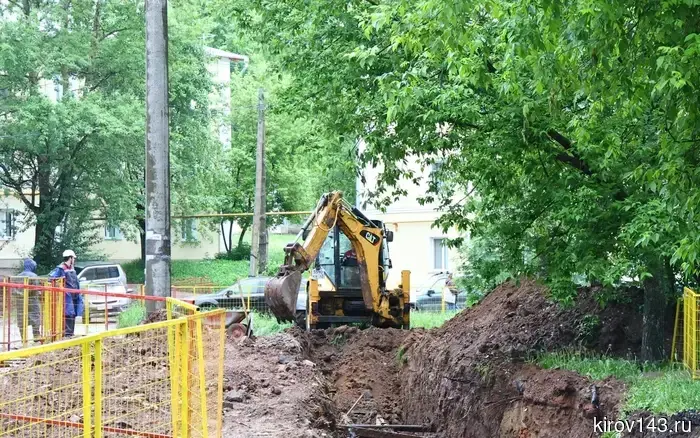 In Kirov, they dug up Sverdlov Street.
The heating networks are being reconstructed in this area.
In Kirov, they dug up Sverdlov Street.
The heating networks are being reconstructed in this area.
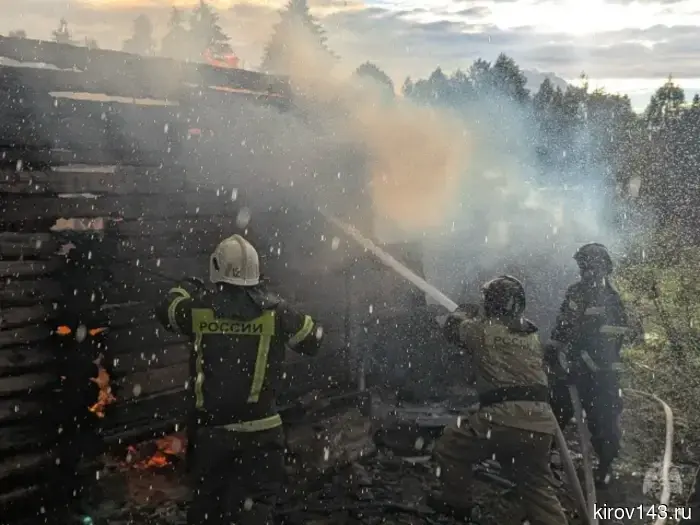 В Кирово-Чепецком районе произошел крупный пожар в результате короткого замыкания.
В среду, 27 мая, в поселке Васькино Кирово-Чепецкого района произошёл пожар в частном доме и пристройке. Площадь возгорания составила 180 м². Для ликвидации пожара выехали 15 сотрудников и 5 единиц техники от МЧС России, областной пожарно-спасательной службы и ведомственной пожарной охраны, информировали в
В Кирово-Чепецком районе произошел крупный пожар в результате короткого замыкания.
В среду, 27 мая, в поселке Васькино Кирово-Чепецкого района произошёл пожар в частном доме и пристройке. Площадь возгорания составила 180 м². Для ликвидации пожара выехали 15 сотрудников и 5 единиц техники от МЧС России, областной пожарно-спасательной службы и ведомственной пожарной охраны, информировали в
 В Кирове на Октябрьском проспекте произошла авария с участием трех автомобилей.
В среду, 27 мая, в 06:40 на Октябрьском проспекте в областном центре произошло массовое дорожно-транспортное происшествие. Участвовали автомобили: «Форд», которым управлял 47-летний мужчина, «Лада Калина» под управлением 49-летнего водителя и «Чери Тигго», за рулем которого находился 41-летний мужчина. В результате инцидента водители «Лады Калины» и...
В Кирове на Октябрьском проспекте произошла авария с участием трех автомобилей.
В среду, 27 мая, в 06:40 на Октябрьском проспекте в областном центре произошло массовое дорожно-транспортное происшествие. Участвовали автомобили: «Форд», которым управлял 47-летний мужчина, «Лада Калина» под управлением 49-летнего водителя и «Чери Тигго», за рулем которого находился 41-летний мужчина. В результате инцидента водители «Лады Калины» и...
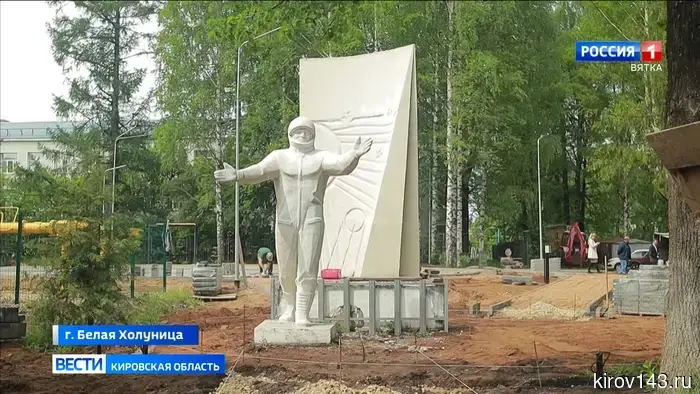 В Кировской области происходит благоустройство общественных пространств.
В Кировской области активно воплощаются проекты по улучшению общественных пространств. В Слободском и Белой Холунице проводятся значительные работы по созданию современных зон для отдыха. О том, как изменяются городские пространства, речь пойдет в нашем следующем репортаже.
В Кировской области происходит благоустройство общественных пространств.
В Кировской области активно воплощаются проекты по улучшению общественных пространств. В Слободском и Белой Холунице проводятся значительные работы по созданию современных зон для отдыха. О том, как изменяются городские пространства, речь пойдет в нашем следующем репортаже.
 В Кирово-Чепецке намерены открыть общежитие для спортивной школы «Олимпия».
Олимпийский чемпион, президент Федерации фиджитал-спорта России и вице-президент Федерации гимнастики Никита Нагорный посетил Кировскую область по приглашению губернатора Александра Соколова. В ходе встречи с главой региона они обсудили вопросы развития спорта и формирования спортивной инфраструктуры в нашем регионе.
В Кирово-Чепецке намерены открыть общежитие для спортивной школы «Олимпия».
Олимпийский чемпион, президент Федерации фиджитал-спорта России и вице-президент Федерации гимнастики Никита Нагорный посетил Кировскую область по приглашению губернатора Александра Соколова. В ходе встречи с главой региона они обсудили вопросы развития спорта и формирования спортивной инфраструктуры в нашем регионе.
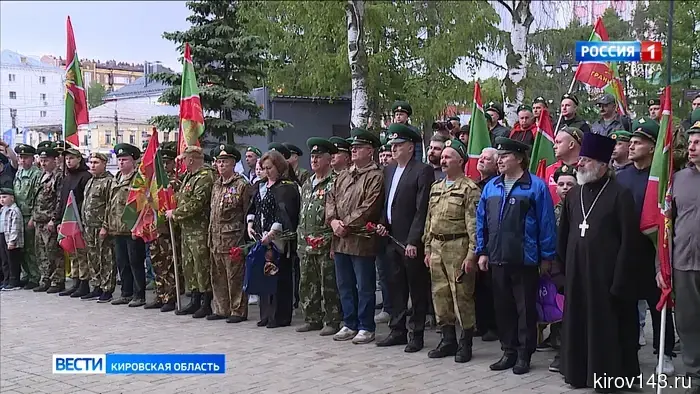 В Кирове отпраздновали День пограничника.
Пограничным войскам исполняется 108 лет. 28 мая часовые границы отмечают свой профессиональный праздник. В Кирове ветераны пограничной службы собрались на площади Александра Невского для проведения торжественного митинга. На мероприятии присутствовала и наш корреспондент Алина Смирнова. АЛИНА СМИРНОВА, КОРРЕСПОНДЕНТ: «28 мая вся
В Кирове отпраздновали День пограничника.
Пограничным войскам исполняется 108 лет. 28 мая часовые границы отмечают свой профессиональный праздник. В Кирове ветераны пограничной службы собрались на площади Александра Невского для проведения торжественного митинга. На мероприятии присутствовала и наш корреспондент Алина Смирнова. АЛИНА СМИРНОВА, КОРРЕСПОНДЕНТ: «28 мая вся
"The Magic Lantern" will show stories to the residents of Kirov.
On May 26, the Film Slide Museum opened at 164 Lenin Street, Building 5. It is a private, non-commercial museum created by speech therapist Yakov Krivoshein. A correspondent from Newsler.ru attended one of the first tours.