
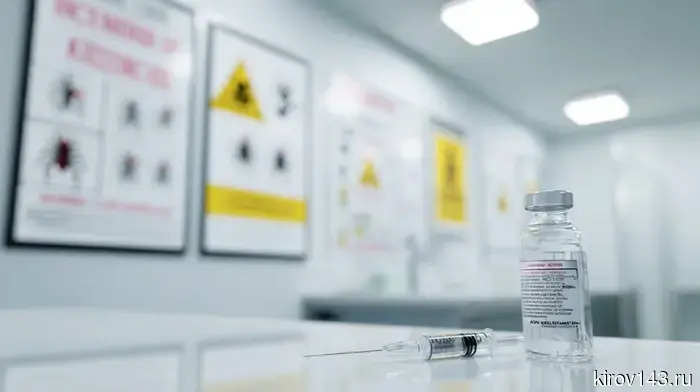
The infectious disease specialist explained the dangers of going to the forest with just one dose of the vaccine.
In 2025, 4.2 million Russians received the tick-borne encephalitis vaccine — 28% more than in 2021. The Federal Service for Surveillance on Consumer Rights Protection and Human Wellbeing (Rospotrebnadzor) is recording a steady increase. However, this growth, as it turns out, is accompanied by a multitude of common misconceptions.
One of the most persistent ones: after vaccination, you cannot go into the forest for a month, otherwise the consequences will be severe.
Andrei Pozdnyakov, a candidate of medical sciences and an infectious disease doctor at INVITRO, explains: the manufacturers' instructions indeed state that it is not recommended to visit areas with a high incidence of tick-borne encephalitis for two weeks after vaccination. According to him, there is a controversial point here: an incomplete vaccination course after a tick bite during this period could theoretically lead to a more severe course of the disease. Most likely, the manufacturer is being overly cautious, but there is a certain logic to it.
The main thing to know about the correct vaccination schedule is that the optimal time is autumn or winter. The primary course consists of two vaccines with an interval of one to six months (the optimal interval is one month). The first revaccination is done once a year after the first vaccine. After that, it is every three years.
If you miss a revaccination, it is not a disaster. The expert recommends checking the level of IgG antibodies. If the titer is 800 or higher, revaccination is recommended to be postponed for a year. If it is below 800 but positive, revaccination is done once. If the antibodies are negative, the full course must be restarted.
And one thing that is absolutely not allowed is to get vaccinated after a tick has already bitten you. This scheme is completely excluded. Only emergency prevention: immunoglobulin (which, according to the doctor, is not very effective) and iodantipyrine.
And finally, comparing 2024 or 2025 with 2021, according to the infectious disease specialist, is incorrect. Because 2021 was the height of the pandemic, the "delta" wave, when planned medicine was effectively frozen. The real dynamics of the last two years is about 3%. And this, according to him, is a good indicator, because there is no specific treatment for tick-borne encephalitis, and severe forms often result in disability or death.
Другие Новости Кирова (НЗК)
 In the Kirov region, a mother of many children was denied an early pension payment.
In the Orichevsky district, the prosecutor's office defended the right of a mother of many children to early pension provision through the court.
In the Kirov region, a mother of many children was denied an early pension payment.
In the Orichevsky district, the prosecutor's office defended the right of a mother of many children to early pension provision through the court.
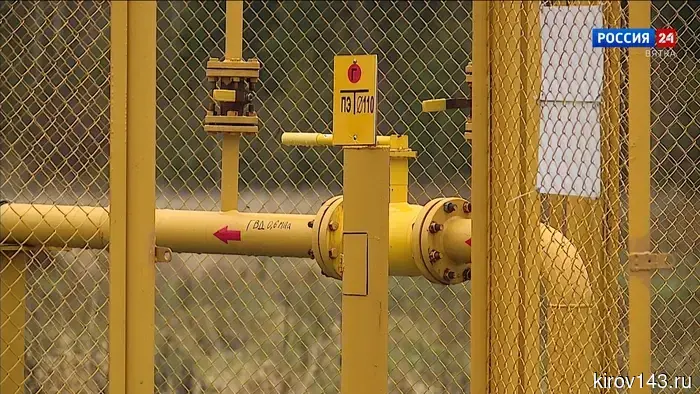 В Кировской области начали подготовку газовых сетей к зимнему сезону.
Подготовка газовых сетей к отопительному сезону должна быть завершена до 1 сентября. Об этом информировало региональное правительство. Необходимо проверить на герметичность 681 км газопроводов. Летом планируется провести текущий ремонт 438 установок электрохимической защиты, а также техническое обслуживание 62 из них.
В Кировской области начали подготовку газовых сетей к зимнему сезону.
Подготовка газовых сетей к отопительному сезону должна быть завершена до 1 сентября. Об этом информировало региональное правительство. Необходимо проверить на герметичность 681 км газопроводов. Летом планируется провести текущий ремонт 438 установок электрохимической защиты, а также техническое обслуживание 62 из них.
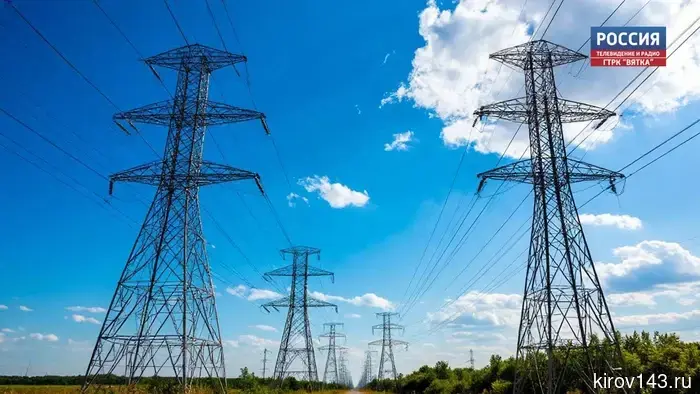 В 2026 году в Кировской области произойдет модернизация 190 километров линий электропередачи.
В 2026 году в Кировской области планируется построить или модернизировать более 190 километров линий электропередачи и 45 трансформаторных подстанций. Эти работы будут осуществлены в рамках инвестиционных программ. Об этом сообщил министр энергетики и ЖКХ региона Максим на заседании Законодательного Собрания.
В 2026 году в Кировской области произойдет модернизация 190 километров линий электропередачи.
В 2026 году в Кировской области планируется построить или модернизировать более 190 километров линий электропередачи и 45 трансформаторных подстанций. Эти работы будут осуществлены в рамках инвестиционных программ. Об этом сообщил министр энергетики и ЖКХ региона Максим на заседании Законодательного Собрания.
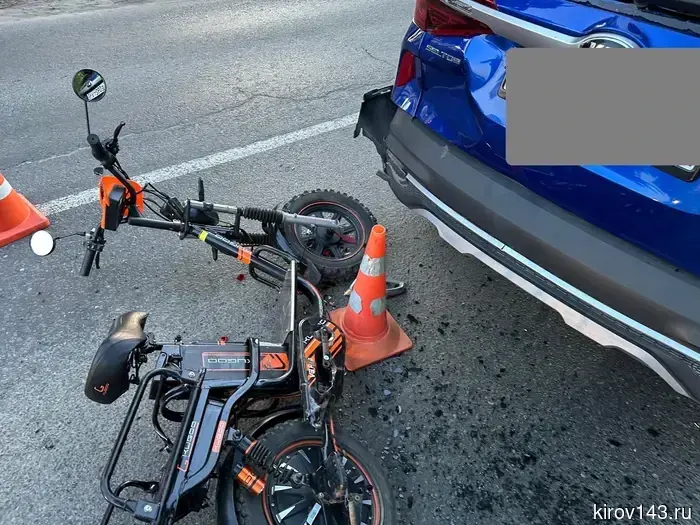 В Кирове в результате ДТП пострадал 17-летний пассажир электросамоката.
В четверг, 21 мая, в 19:25 в слободе Столбики города Киров произошло столкновение электросамоката, которым управлял 17-летний парень, и автомобиля «Киа Рио», за рулем которого сидела 56-letняя женщина. По предварительным данным сотрудников ГИБДД по Кировской области, в результате инцидента были получены травмы.
В Кирове в результате ДТП пострадал 17-летний пассажир электросамоката.
В четверг, 21 мая, в 19:25 в слободе Столбики города Киров произошло столкновение электросамоката, которым управлял 17-летний парень, и автомобиля «Киа Рио», за рулем которого сидела 56-letняя женщина. По предварительным данным сотрудников ГИБДД по Кировской области, в результате инцидента были получены травмы.
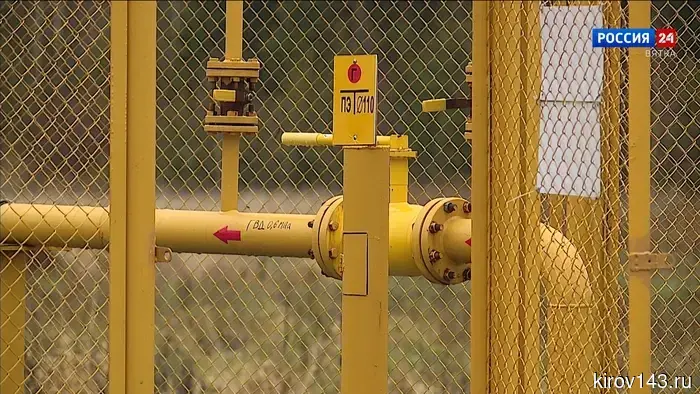 Газовые сети Кировской области начали подготовку к зимнему сезону.
Подготовка газовых сетей к отопительному сезону должна быть завершена до 1 сентября, сообщили в региональном правительстве. Необходимо будет проверить на герметичность 681 км газопроводов. Летом планируется текущий ремонт 438 установок электрохимической защиты, также пройдет техническое обслуживание 62 систем.
Газовые сети Кировской области начали подготовку к зимнему сезону.
Подготовка газовых сетей к отопительному сезону должна быть завершена до 1 сентября, сообщили в региональном правительстве. Необходимо будет проверить на герметичность 681 км газопроводов. Летом планируется текущий ремонт 438 установок электрохимической защиты, также пройдет техническое обслуживание 62 систем.
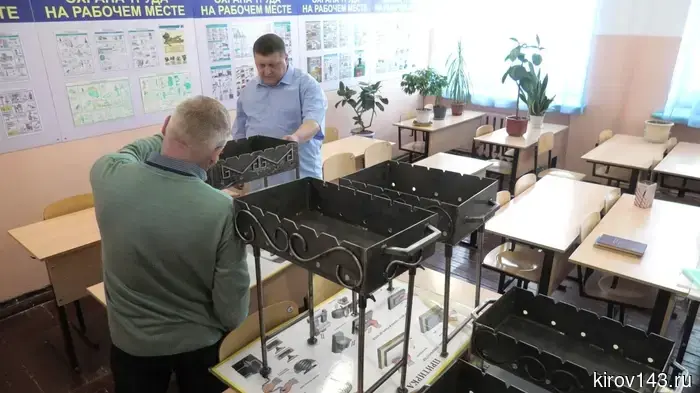 In the Kirov colonies, seamstresses and welders competed.
Ten minutes for theory, two hours for practice, and a grade on a ten-point scale. In Kirovo-Chepetsk and Kotelnich, the convicts determined who was the best in their profession. In the 2025–2026 academic year, over 1.3 thousand people underwent vocational training.
In the Kirov colonies, seamstresses and welders competed.
Ten minutes for theory, two hours for practice, and a grade on a ten-point scale. In Kirovo-Chepetsk and Kotelnich, the convicts determined who was the best in their profession. In the 2025–2026 academic year, over 1.3 thousand people underwent vocational training.
The infectious disease specialist explained the dangers of going to the forest with just one dose of the vaccine.
In the tick season of 2026, there were more vaccinations. But along with them came strange rituals: not going into the woods for a month after the shot, and running for a new vaccine if bitten. An infectious disease doctor analyzed these schemes. Some of them are indeed outlined in the instructions. Others are dangerous.