
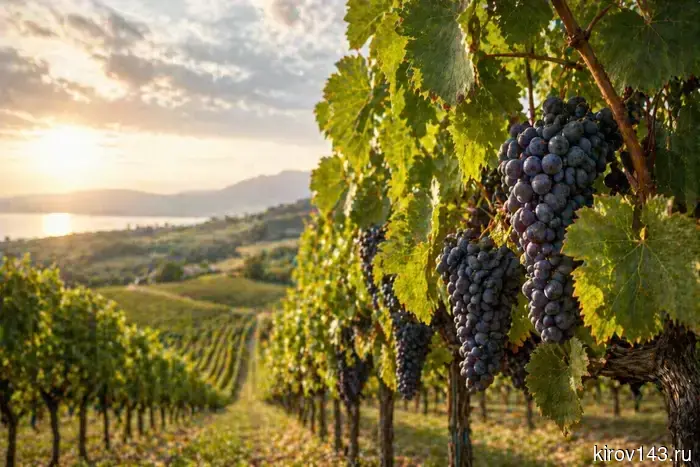
Every second wine in Russia is its own: domestic producers have taken almost two-thirds of the market.
Growth figures: harvest, production, and vineyard area
The main reason for success is the record harvest. In 2025, farmers collected 955 thousand tons of grapes. This is the highest figure in the history of modern Russia. For comparison, in 2024, 908 thousand tons were harvested, which means a growth of about 5%.
The total area of vineyards reached 113.3 thousand hectares. Of these, 89.5 thousand hectares are in the fruit-bearing age, and the planting plan for 2026 is another 5 thousand hectares.
Wine production in 2025 increased by 11.5% compared to the previous year, which allowed domestic products to gain market share. In total, as of the end of September 2025, 46.6 million decaliters of wine products were produced, including 26.8 million decaliters of grape wine and 12.2 million decaliters of champagne.
As for sales, in 2025, 56 million decaliters of grape wines and 22.7 million decaliters of sparkling wines were sold. At the same time, the share of Russian wines in liters is already 65% for still wines and 70% for sparkling wines, while in units, 74% of sold sparkling wine and 57% of still wine are Russian products.
Who leads in production
The undisputed leader remains the Krasnodar Krai. Here, in 2025, 15.5 million decaliters of wine were produced — this is 42% of the total Russian production. In second place is Crimea with 7.1 million decaliters (19%), and in third place is the Leningrad region — 3.9 million decaliters (almost 11%).
At the same time, Kabardino-Balkaria showed the highest growth rate: wine production there increased 1.8 times to 984.4 thousand decaliters. The Leningrad region (to 3.9 million decaliters) and Dagestan (to 2.2 million decaliters) also increased production by a third.
The market is changing: imports give way to Russian wine
Until 2020, the Russian wine market was heavily dependent on imports: the share of domestic wines in retail was often below 50%. The situation began to change after the adoption of the federal law "On Viticulture and Winemaking in the Russian Federation" in December 2019. The law comprehensively regulated the industry for the first time, introduced clear requirements for production and labeling, stimulated the use of Russian raw materials, and laid the foundation for state support.
In addition, protective measures were implemented. Tariffs on wines from unfriendly countries were raised to 25% over two years (but not less than two dollars per liter), which objectively displaced part of the foreign products into the premium segment.
Experts look to the future with optimism. Associate Professor at the Presidential Academy in St. Petersburg, Maxim Chernigovsky, believes that in 2026, with continued support measures, the share of domestic wines could grow to 65–67%, and in the coming years, reaching the 70% mark is an ambitious but achievable goal.
Forum in Moscow: what winemakers will discuss
On November 18–19, the anniversary fifth Russian Winemaking Forum will be held in Moscow. The event will become a key industry platform for discussing the priorities for the development of viticulture and winemaking, as well as issues of market regulation and international cooperation.
Advisor to the President of the Russian Federation and responsible secretary of the forum's organizing committee Anton Kobyakov emphasized: the record harvest and increased production allow Russian wines to occupy an ever-growing share of the market. In 2026, it is especially important to strengthen international cooperation with BRICS countries, support small and medium winemaking, and ensure the sustainability of the industry in the face of new regulatory challenges.
The focus of the business program of the forum will be on the development of cooperation with BRICS countries, launching educational programs for training specialists, and exchanging industry expertise.
Discussion of support measures
Dmitry Patrushev noted that over the five years since the adoption of the law "On Viticulture and Winemaking in the Russian Federation," the industry has noticeably transformed. The approach to production has improved, the professionalism of employees has increased, and the rules now meet global standards. As a result, a product has emerged that consumers are ready to choose.
Within the framework of the forum, support for small and medium winemaking enterprises will be discussed separately. According to the Deputy Prime Minister, the state allocates significant funds annually to support the industry. The pace of vineyard planting in Russia is among the highest in the world, and wine production is increasing.
Grape growers and winemakers today have access to a wide range of support measures: from preferential lending and leasing to grants, agricultural insurance, and assistance in production development and agritourism.
Russian wine is becoming not only more accessible but also more popular. Already now, in retail sales, about 60% of still wines and more than 70% of sparkling wines are accounted for by Russian products, primarily in federal chains. In terms of quality and taste characteristics, the average segment, in which Russian wines are represented, is no less competitive than more expensive imported counterparts.
All this indicates that the industry is not just growing, but seriously and sustainably strengthening its positions.
Другие Новости Кирова (НЗК)
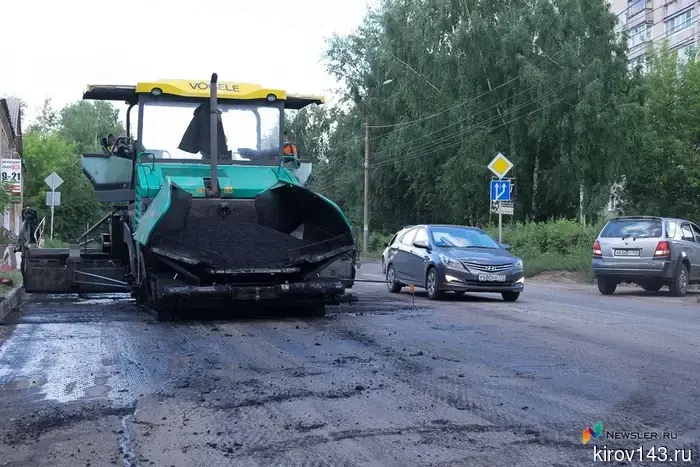 The section of the road Kirs — Rudnichny — Loyno will be repaired for 51 million.
The length is 2.79 kilometers.
The section of the road Kirs — Rudnichny — Loyno will be repaired for 51 million.
The length is 2.79 kilometers.
 Mass accident on the Kostroma-Perm highway: traffic is partially restricted
An accident involving four cars occurred on the federal highway in the Kirov region. One person was injured.
Mass accident on the Kostroma-Perm highway: traffic is partially restricted
An accident involving four cars occurred on the federal highway in the Kirov region. One person was injured.
 In the Urzhum district, they want to repair the bridge for 88 million.
The authorities are currently looking for a contracting organization.
In the Urzhum district, they want to repair the bridge for 88 million.
The authorities are currently looking for a contracting organization.
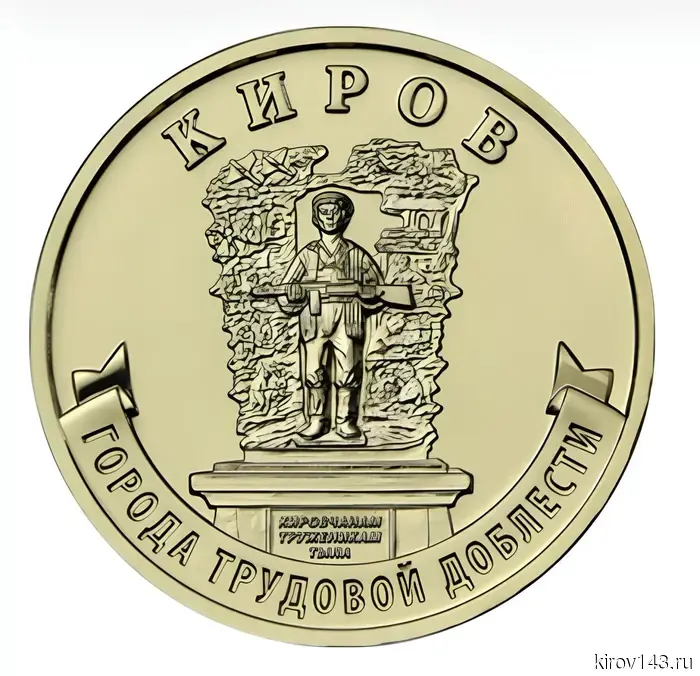 Kirov will be put into circulation.
The Bank of Russia will issue a commemorative coin titled "Kirov." It will be part of the series "Cities of Labor Valor" and will become a regular means of payment.
Kirov will be put into circulation.
The Bank of Russia will issue a commemorative coin titled "Kirov." It will be part of the series "Cities of Labor Valor" and will become a regular means of payment.
 Kirov will be put into circulation.
The Bank of Russia will issue a commemorative coin titled "Kirov." It will be part of the series "Cities of Labor Valor" and will become a regular means of payment.
Kirov will be put into circulation.
The Bank of Russia will issue a commemorative coin titled "Kirov." It will be part of the series "Cities of Labor Valor" and will become a regular means of payment.
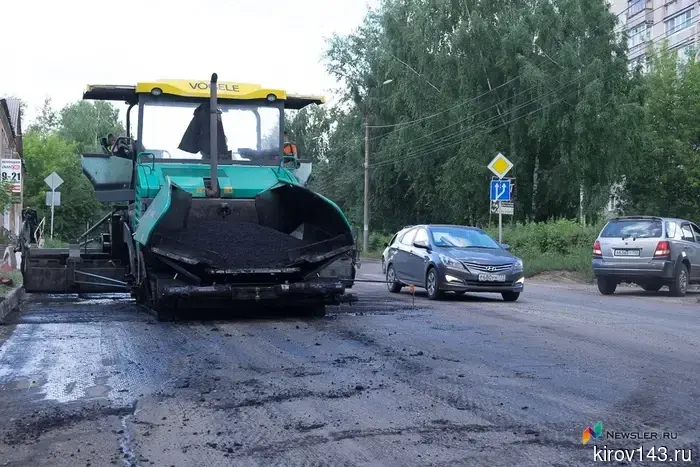 The section of the road Kirs - Rudnichny - Loyno will be repaired for 51 million.
The length is 2.79 kilometers.
The section of the road Kirs - Rudnichny - Loyno will be repaired for 51 million.
The length is 2.79 kilometers.
Every second wine in Russia is its own: domestic producers have taken almost two-thirds of the market.
Russian winemaking continues to confidently conquer store shelves. By the end of 2025, the share of domestic wines in the country reached almost 63%. This was reported by the office of the Deputy Prime Minister of the Russian Federation, Dmitry Patrushev.