
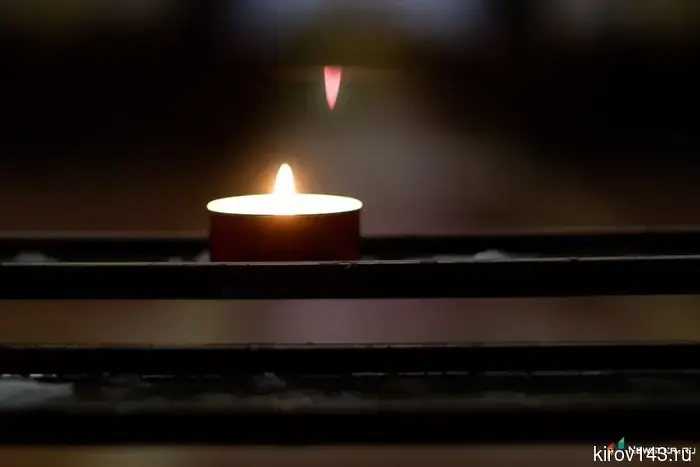
April 19 - Day of Remembrance for the Victims of the Genocide of the Soviet People
"Execute by hanging"
By mid-1943, the Red Army had driven the enemy westward. Behind the front lines lay horrors that chilled the blood even of seasoned front-line soldiers. Villages burned to the ground, trenches piled high with the bodies of women, the elderly, and children, camps where people died by the hundreds each day.
On April 19, 1943, the Presidium of the Supreme Soviet of the USSR issued decree No. 39 "On measures of punishment for German-Fascist villains guilty of the murder and torture of the Soviet civilian population and captured Red Army soldiers, for spies, traitors to the motherland among Soviet citizens, and for their accomplices." It stated: "Numerous facts of unheard-of atrocities and monstrous violence have been uncovered... Many tens of thousands of innocent women, children, and the elderly have been brutally tortured, hanged, shot, and burned alive." The decree mandated the public execution of fascist villains by hanging, with the bodies left on the gallows for several days, "so that everyone knows how punishment is meted out and what retribution awaits anyone who commits violence and retribution against the civilian population."
This is not just a decree; it is a cry of pain and rage. For the first time, the Soviet state named what was happening by its true name. Today we know this word — genocide.
"Excess" 30 million
The most terrifying thing is that these atrocities were not mere outbursts of cruelty on the ground. They were planned in clean offices months before the war. The General Plan "Ost" envisioned that 65-75% of Belarusians, Ukrainians, and Russians were to be deported to death beyond the Ural Mountains, while the rest would become slaves of German colonists. Jews and Roma were to be completely exterminated.
Herbert Backe's "Hunger Plan" aimed to transport all food from the fertile soils of Ukraine to Germany, condemning Moscow, Leningrad, and other cities to death by starvation. Nazi economists calculated that 30 million "excess" people would die, and this was part of the plan. An order from May 13, 1941, exempted German soldiers from responsibility for shooting civilians. All of this was written before the first German tank crossed the border.
7,000 murdered children and a village burned alive
Near Riga, in the concentration camp "Salaspils," the Nazis held children. They were brought from Belarus and near Leningrad, torn from their mothers and used as blood donors for wounded German soldiers. Blood was taken until the children died. More than 7,000 children perished in Salaspils.
In the Belarusian village of Khatyn on March 22, 1943, punitive forces rounded up the residents in a barn and set it on fire. Those trying to escape were shot with machine guns. 149 people, including 75 children, were burned alive. The village was also burned down. It was not rebuilt. A memorial now stands at this site. And silence. Over the years of the war, the Nazis erased 70,000 Soviet villages from the face of the earth. 25 million people were left homeless.
872 days of hunger
Leningrad was not bombed for no reason — it was meant to be starved. Hitler openly stated: the city must disappear. In the winter of 1941-1942, people ate carpenter's glue, leather straps, and pine porridge. The bread ration was 125 grams per day — a small piece that contained sawdust, cellulose, and pine bark. People collapsed in the streets from weakness and did not get up again. According to modern data, more than 1 million 93 thousand people died during the blockade. In 2022, the St. Petersburg court recognized the blockade as genocide.
Slaves with the "OST" patch
5.2 million Soviet people — men, women, teenagers — were taken to Germany. They were called "ostarbeiter," workers from the East. Their clothing bore the "OST" patches — like a brand on cattle. They lived in barracks or stables with cows, worked 14-16 hours a day, and were given just enough food to avoid starving to death; they could not regain their strength. 2.16 million ostarbeiter did not return home — they died from hunger, disease, and beatings. They were forbidden to start families; on June 9, 1942, Himmler said: "We will completely destroy any slave family." They were denied not just a future — but the very right to live.
13.6 million who cannot be returned
The Soviet Union lost 26.6 million people in the Great Patriotic War. Half of them were not soldiers, but civilians and prisoners of war. More than 7.4 million were shot, burned alive, or tortured in camps. 4.1 million died from hunger, cold, and diseases that the Nazis created deliberately. 2.16 million perished in German slavery. 3.3 million died in captivity, although the Geneva Convention prohibited killing prisoners. 216.5 thousand children were killed by the Nazis. The total number of victims of the genocide of the Soviet people is more than 13.6 million. This is one in five who lived in the occupied territory.
Justice and memory
On November 2, 1942, by decree of the Presidium of the Supreme Soviet of the USSR, an Extraordinary State Commission was established to investigate and document the crimes of the German-Fascist invaders and their accomplices. The commission collected 250,000 witness testimonies and 54,000 acts of atrocities. These documents were presented in Nuremberg, where the main Nazi criminals received their just punishment.
In 2020-2025, court proceedings in 34 regions of Russia recognized the actions of the Nazis and their accomplices as genocide against the Soviet people. The clarified number of victims, confirmed by the courts, amounted to 8,167,959 people — but this is only those who could be counted.
From 2026, April 19 will be the official Day of Remembrance for the victims of the genocide of the Soviet people. On this day, we remember the children of Salaspils, those shot in the Zmiyevskaya ravine, the exhausted blockade survivors who died with a piece of bread, the ostarbeiter with the "OST" patch, and the hundreds of thousands of prisoners of war who were not fed because, as the fascists believed, "subhumans" did not need food.
Their memory is our shared pain and our shared responsibility.
Другие Новости Кирова (НЗК)
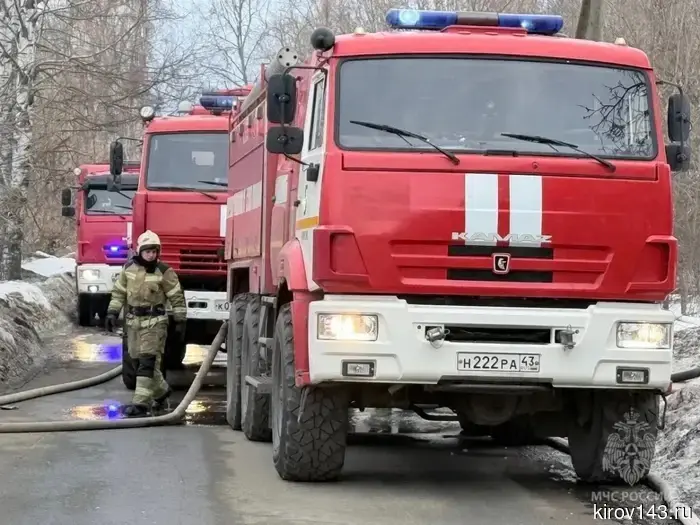 The Ministry of Emergency Situations named the causes of the fires in Kirov and details of the traffic accident.
As a result of one of the incidents, a person was injured.
The Ministry of Emergency Situations named the causes of the fires in Kirov and details of the traffic accident.
As a result of one of the incidents, a person was injured.
 A geriatric office has been established at the Kirov emergency hospital.
Patients aged 65 and over can apply there.
A geriatric office has been established at the Kirov emergency hospital.
Patients aged 65 and over can apply there.
 The Ministry of Emergency Situations named the causes of fires in Kirov and details of the traffic accident.
As a result of one of the incidents, a person was injured.
The Ministry of Emergency Situations named the causes of fires in Kirov and details of the traffic accident.
As a result of one of the incidents, a person was injured.
 A geriatric office has been established at the Kirov emergency hospital.
Patients aged 65 and over can apply there.
A geriatric office has been established at the Kirov emergency hospital.
Patients aged 65 and over can apply there.
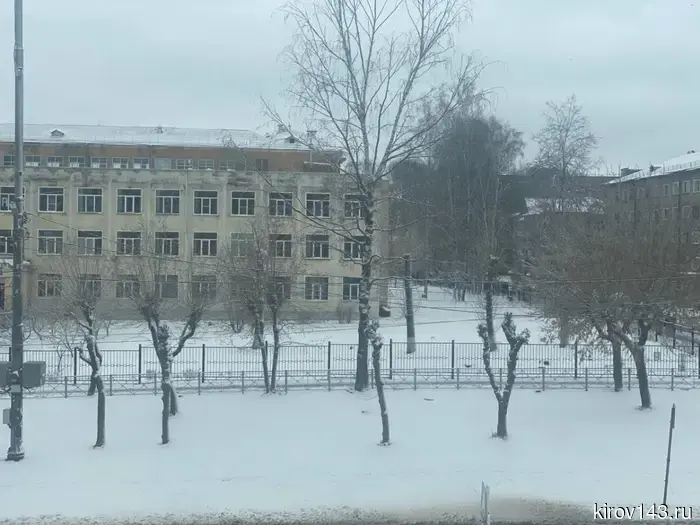 Residents of the Kirov region are warned about worsening weather conditions.
Precipitation, ice, and strong winds are expected.
Residents of the Kirov region are warned about worsening weather conditions.
Precipitation, ice, and strong winds are expected.
 Residents of the Kirov region are warned about the deterioration of weather conditions.
Precipitation, icy conditions, and strong winds are expected.
Residents of the Kirov region are warned about the deterioration of weather conditions.
Precipitation, icy conditions, and strong winds are expected.
April 19 - Day of Remembrance for the Victims of the Genocide of the Soviet People
On April 19, Russia remembers the victims of the genocide of the Soviet people. The date was chosen deliberately — it was on this day in 1943 that a decree was issued, for the first time declaring the crimes of the Nazis against the civilian population illegal. However, the policy of extermination was developed long before the war. How the Nazis planned the destruction of entire nations and why these crimes have no statute of limitations — in the material from Newsler.ru.