
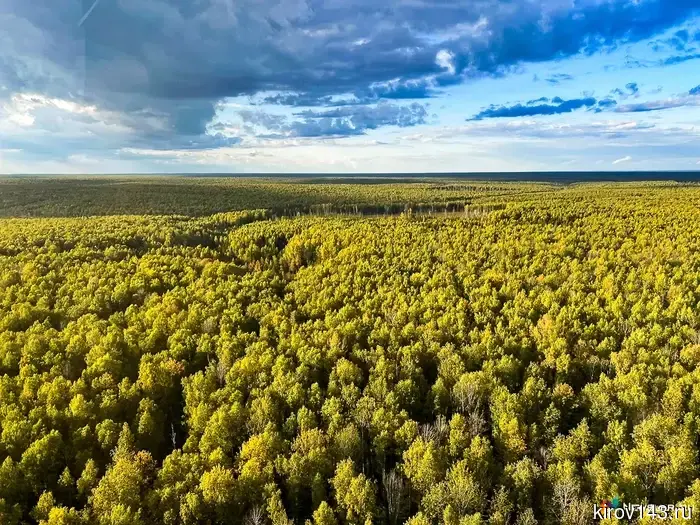
The Kirov region entrusted the restoration of forests to rain and sun.
The Kirov region remains one of the most forested areas in the country, with 63% of its territory occupied by green massifs. However, the methods of caring for this wealth changed significantly last year. Instead of active human intervention, forest ecosystems are increasingly being allowed to cope on their own. According to the regional Ministry of Forestry and Kirovstat, in 2025, natural forest restoration accounted for 85.6% of all areas where relevant work was carried out. This means that in most of the territory, specialists simply allowed nature to regenerate itself—without seedlings, without planting, relying on rain, sun, and natural seed dispersal. Traditional artificial forest restoration accounted for only 13.4%. The combined method, which combines manual labor and natural processes, took a symbolic 1%. The total volume of reforestation activities amounted to 27.7 thousand hectares, which is 4.1% less than the previous year. Funding for this area also decreased to 210.7 million rubles, which is 3% lower than the 2024 figure. The activity in thinning operations decreased even more dramatically. In 2025, such work took place on 16.6 thousand hectares—8.6% less than a year ago. Almost half of these were thinning and cleaning operations aimed at forming young growth. Costs for forest care also decreased, dropping to 219.2 million rubles. The most dramatic reduction affected sanitary and health-improving measures. Their volumes collapsed almost by half—to 0.2 thousand hectares. At the same time, preventive work to protect against pests was maintained almost at last year's level: 7.9 thousand hectares were treated. The region's forestry strategy in 2025 appears as a gradual retreat of humans and a transfer of initiative to nature. The question is how quickly the forest will be able to adapt to such trust and whether the savings in budget funds will lead to long-term ecological risks.
Другие Новости Кирова (НЗК)
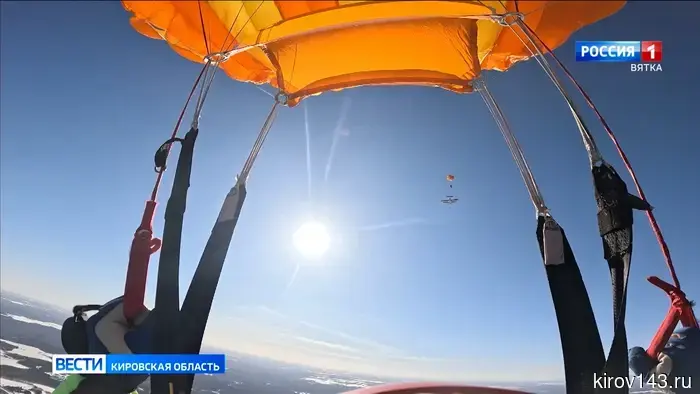 Пожарные-парашютисты осуществляют воздушные тренировки.
В Кировской области проходят воздушные учения Приволжского отделения Авиалесоохраны. Ожидается, что предстоящий пожароопасный сезон будет сложным из-за аномальных погодных условий. Как парашютисты-пожарные отрабатывают свои навыки в экстремальных условиях – репортаж Дарьи Якименко. - Поднимаемся на борт для выполнения.
Пожарные-парашютисты осуществляют воздушные тренировки.
В Кировской области проходят воздушные учения Приволжского отделения Авиалесоохраны. Ожидается, что предстоящий пожароопасный сезон будет сложным из-за аномальных погодных условий. Как парашютисты-пожарные отрабатывают свои навыки в экстремальных условиях – репортаж Дарьи Якименко. - Поднимаемся на борт для выполнения.
 The Bank of Russia has lowered the key rate to 15%.
The indicator decreased by 50 basis points.
The Bank of Russia has lowered the key rate to 15%.
The indicator decreased by 50 basis points.
 Reference point: what the spring equinox will bring
From the perspective of astronomy, the day of the spring equinox is the moment when the Sun, in its apparent motion along the ecliptic (the path among the stars), crosses the celestial equator. In 2026, this event occurred on March 20 at 14:46 Moscow time.
Reference point: what the spring equinox will bring
From the perspective of astronomy, the day of the spring equinox is the moment when the Sun, in its apparent motion along the ecliptic (the path among the stars), crosses the celestial equator. In 2026, this event occurred on March 20 at 14:46 Moscow time.
 In the Kirov region, tax conditions for small and medium-sized businesses have changed.
The Ministry of Industry and Trade spoke about innovations for entrepreneurs.
In the Kirov region, tax conditions for small and medium-sized businesses have changed.
The Ministry of Industry and Trade spoke about innovations for entrepreneurs.
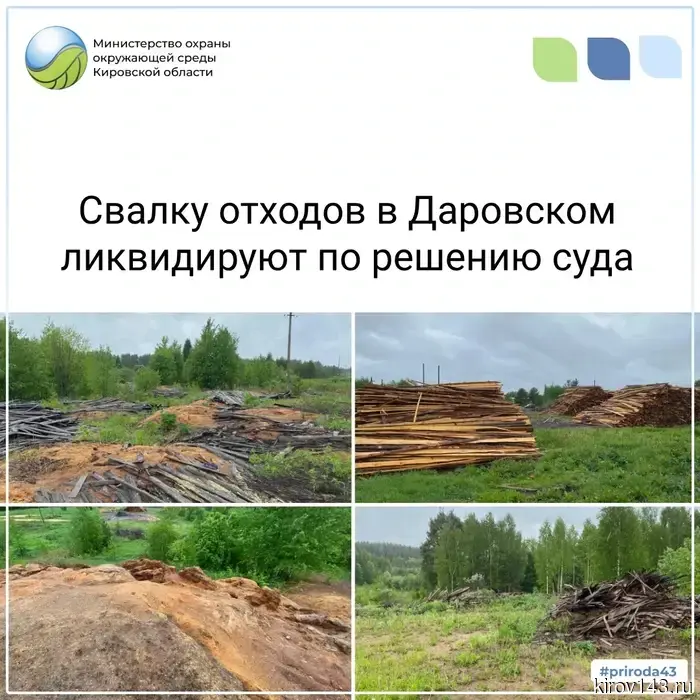 In Darovsky, the waste from sawmilling will be removed.
The Kotelnich District Court granted the lawsuit of the Ministry of Natural Resources of the Kirov Region for the liquidation of the wood processing waste dump in the urban-type settlement of Darovskoy.
In Darovsky, the waste from sawmilling will be removed.
The Kotelnich District Court granted the lawsuit of the Ministry of Natural Resources of the Kirov Region for the liquidation of the wood processing waste dump in the urban-type settlement of Darovskoy.
 A drunken ride cost a Kirov resident 350 thousand rubles.
In Kirov, a sentence has been handed down to a 42-year-old local resident for repeatedly driving a car while intoxicated.
A drunken ride cost a Kirov resident 350 thousand rubles.
In Kirov, a sentence has been handed down to a 42-year-old local resident for repeatedly driving a car while intoxicated.
The Kirov region entrusted the restoration of forests to rain and sun.
The results of the forestry year have been summarized in the region. It turned out that nature was allowed to work on its own: artificial plantings gave way to natural regeneration. At the same time, funding for the industry has decreased, and the volumes of thinning cuts have noticeably dropped.